
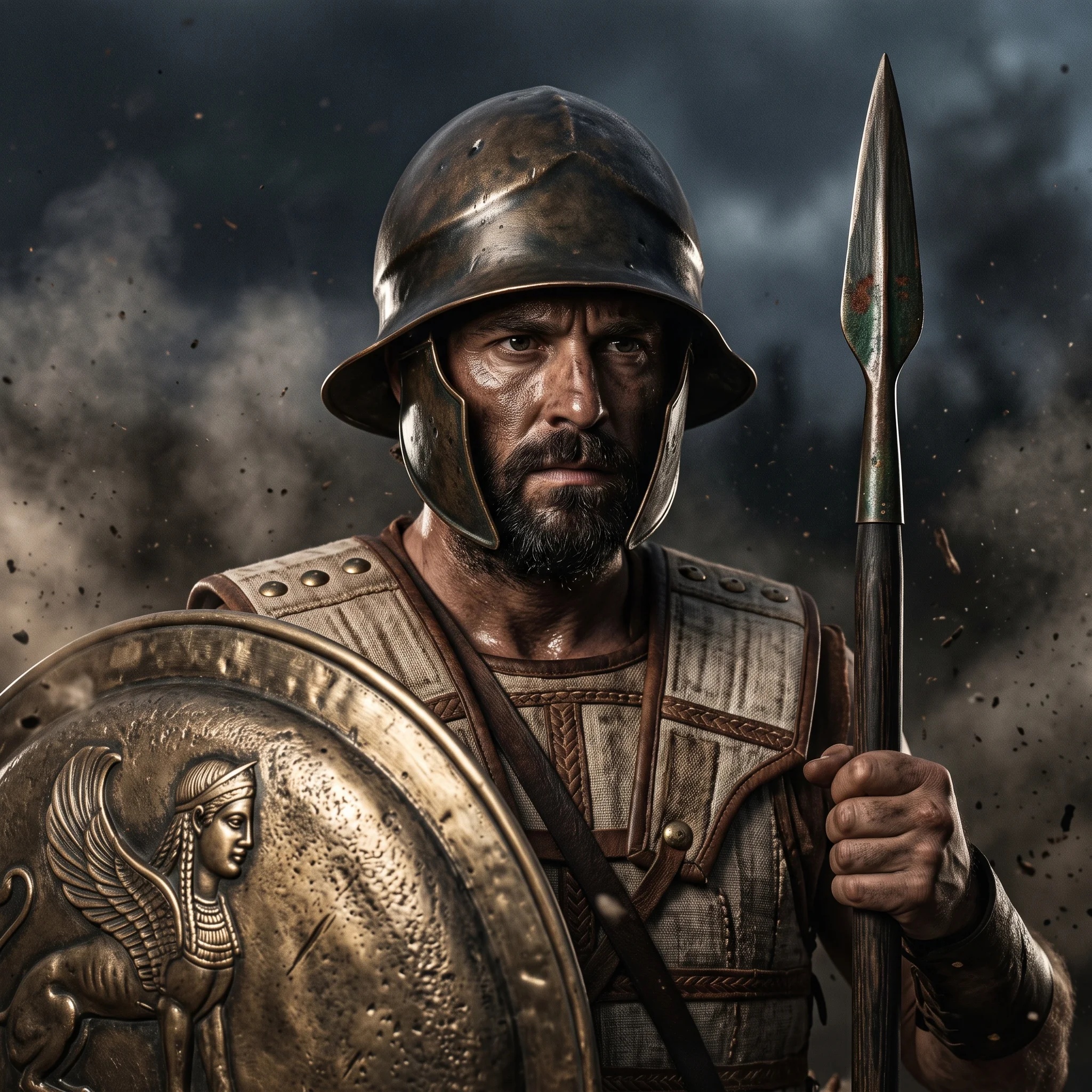
Sacred Band of Thebes: The Elite Unit That Shattered Sparta
The Sacred Band of Thebes was ancient Greece’s most formidable strike unit. For over three decades, this force of three hundred chosen hoplites overturned centuries of Spartan supremacy and fundamentally altered Mediterranean military doctrine.
Before their ascent, Greek land combat was bound by strict conservative tradition. Armies aligned in uniform lines of bronze and wood, marching forward until physical weight and spear points cracked the opposing formation.
The Sacred Band of Thebes broke this rigid mold. Armed with tactical daring and extraordinary cohesion, this elite brotherhood transformed Thebes from a bullied regional state into the supreme military superpower of Hellas.
The Birth of an Elite Brotherhood: Selection and Social Cohesion
The emergence of the Sacred Band of Thebes was a direct response to foreign tyranny. In 382 BC, a treacherous Spartan force seized the Cadmea, the citadel of Thebes, installing an oppressive pro-Spartan oligarchy.
When Theban patriots liberated their city three years later, they resolved never again to suffer foreign occupation. In 378 BC, the Theban commander Gorgidas organized a permanent, professional strike force of three hundred elite hoplites.
Gorgidas based selection on physical prowess, athletic achievement, and unwavering devotion. Unlike citizen militias who worked as farmers, merchants, and stonemasons, the Sacred Band of Thebes trained continuously as full-time soldiers.
The city funded their food, weapons, and quarters on the Cadmea. This made them Greece’s first state-sponsored standing army outside of Sparta.
                  [ Theban State Treasury ]
                             │
            (Full Funding, Rations, & Equipment)
                             ▼
               [ The Cadmea Fortress Garrison ]
                             │
     ┌───────────────────────┴───────────────────────┐
     ▼                                               ▼
150 Heniochoi (Senior Charioteers)     150 Paraibatai (Junior Companions)
The defining social dynamic of the unit was its emotional foundation. Gorgidas paired the three hundred men into one hundred and fifty devoted couples, consisting of an older erastes (mentor/lover) and a younger eromenos (beloved).
This arrangement was not a casual social detail; it was a lethal psychological system. As the historian Plutarch noted, men who might flee in the presence of strangers would rather perish than face dishonor before their beloved. In combat, the Sacred Band of Thebes fought with fierce reciprocal protectiveness that rendered panic unthinkable.
The Evolution of Command: From Vanguard Dispersal to Unified Shock Force
Gorgidas originally deployed his elite force across the front line of the citizen army. In early engagements against Spartan raids, he placed files of the Sacred Band of Thebes as shock vanguard units to stiffen the resolve of ordinary conscripts.
This approach proved inefficient. It scattered the unit’s cohesion and diluted its collective striking force.
The transformation arrived with Pelopidas, a bold aristocrat and field general. Pelopidas recognized that dispersing three hundred men throughout a larger line destroyed their greatest asset: concentrated shock power.
He bound the unit into an undivided tactical fist, keeping them under his direct personal command.
EARLY DOCTRINE (Gorgidas):
[Sacred Band] ... [Militia Phalanx] ... [Sacred Band] ... [Militia Phalanx]
(Dispersed Shock Units, Diluted Mass)

REFORMED DOCTRINE (Pelopidas & Epaminondas):
[Concentrated Sacred Band (300 Hoplites)] ===> Focused Kinetic Wedge
The first decisive proof of this new doctrine occurred in 375 BC at the Battle of Tegyra. Pelopidas, leading the Sacred Band of Thebes accompanied by a small cavalry detachment, encountered two Spartan battalions totaling nearly one thousand men.
Though outnumbered more than three to one, Pelopidas ordered an immediate assault.
The Sacred Band of Thebes charged straight into the Spartan command post, killing both Spartan polemarchs in the opening clash. The Spartan line splintered, and the Thebans routed the remaining force.
For the first time in documented history, an inferior Greek force defeated a superior Spartan army in open field combat.
Arms, Armor, and Technical Specifications of the Theban Strike Force
The Sacred Band of Thebes carried specialized equipment designed for close-quarter pressure. Their armor kit differed notably from the heavier panoply used during the Persian Wars, favoring mobility and forward momentum.
+-------------------------------------------------------------+
|        SACRED BAND ARMS AND ARMOR SPECIFICATIONS            |
+------------------------------+------------------------------+
| WEAPONRY                     | DEFENSIVE PROTECTION         |
| - Dory Spear: 2.7 to 3.0 m   | - Aspis Shield: 85-90 cm dia |
| - Sauroter (Bronze Butt-cap) | - Linen/Leather Linothorax   |
| - Machaira (Curved Sword)    | - Boeotian Open-Faced Helm   |
| - Xiphos (Straight Blade)    | - Bronze Muscled Greaves     |
+------------------------------+------------------------------+
The Primary Arsenal
The primary weapon was the dory, an ash-wood thrusting spear measuring between 2.7 and 3.0 meters. It was tipped with a leaf-shaped iron spearhead and counterbalanced by a four-sided bronze butt-spike called a sauroter.
This butt-spike functioned as a secondary weapon if the primary shaft snapped, while also anchoring the spear into the dirt during pauses in combat.
For secondary weapons, these elite hoplites favored the machaira or kopis, a curved, single-edged iron cutting sword. Unlike the straight, stabbing xiphos, the forward weight of the machaira allowed warriors to deliver downward chopping strokes that cleaved through helmets and bronze greaves.
This made it deadly when enemy formations broke into close combat. For related insights on classical iron arms, see [Internal Link: The Lorica Hamata].
Defensive Adjustments
Defensive panoply prioritized visibility and situational awareness:
-
The Boeotian Helmet: Unlike the restrictive Corinthian helmet that covered the cheeks and blocked peripheral vision and hearing, the open-faced Boeotian helmet gave Theban soldiers broad visibility, unimpeded breathing, and the ability to hear shouted tactical commands.
-
The Linothorax: Guardsmen wore quilted linen or composite leather cuirasses reinforced with bronze scales over the midsection, discarding the stifling, solid bronze bell cuirass.
-
The Aspis Shield: The unit carried the standard concave wooden aspis shield, approximately 90 centimeters in diameter, faced with thin bronze and gripped via the porpax arm-band and antilabe cord.
Tactical Innovation: The Epaminondas Doctrine and the Oblique Phalanx
The Sacred Band of Thebes became the spearhead for the most revolutionary tactical system in ancient warfare: the oblique order (loxē phalanx). Devised by Epaminondas, a philosopher-general and close partner of Pelopidas, this doctrine dismantled the foundation of traditional Greek hoplite combat.
TRADITIONAL GREEK COMBAT:
Spartan Line (8 to 12 Ranks Deep)     =======================>
Opposing Line (8 to 12 Ranks Deep)    <=======================
(Uniform collision across the entire battlefront)

EPAMINONDAS'S OBLIQUE ASSAULT:
Spartan Royal Wing (12 Deep)          ========   (Refused Weak Wing)
                                         ^
                                        /
Theban Column (50 Deep)       [SACRED BAND WEDGE]
(Massive Local Superiority)   (Crushes Spartan Right Before Center Engages)
For centuries, Greek battles were symmetrical collisions. Both sides deployed their hoplites in unbroken rectangular lines eight to twelve ranks deep.
Because every hoplite carried his shield on the left arm and sought the protection of his neighbor’s shield, the right wing naturally drifted to the right during the advance. Warlords instinctively placed their finest veteran troops on this favored right flank, hoping to roll up the enemy’s weaker left wing before their own left collapsed.
Epaminondas inverted this tradition. He deliberately reinforced his own left wing to an unprecedented depth of fifty ranks.
He ordered his center and right wings to advance diagonally at an angle, refusing combat with the rest of the enemy line.
At the tip of this fifty-rank left-wing column, Epaminondas placed the Sacred Band of Thebes. Their mission was to act as an armor-piercing kinetic wedge, crashing into the enemy’s elite right flank and killing their command group before the rest of the armies collided.
The Zenith: Crushing Spartan Supremacy at Leuctra (371 BC)
The strategic climax of this doctrine occurred on the plains of Leuctra in July 371 BC. King Cleombrotus I of Sparta stood with an army of ten thousand men, including seven hundred Spartan citizens of the elite royal guard (Hippeis).
The Thebans faced them with only six thousand hoplites. Under ordinary circumstances, numerical superiority and Spartan martial dominance would have settled the contest in minutes.
Epaminondas organized his revolutionary formation under a baking summer sun. He concentrated his massive, fifty-rank column on the left directly opposite Cleombrotus and his royal guard.
The center and right wings of the Theban line were ordered to stay back, holding their ground while the left struck. Pelopidas positioned the Sacred Band of Thebes at the extreme left tip of this column.
                           [ BATTLE OF LEUCTRA - 371 BC ]

Spartan Left (Allies)       Spartan Center (Allies)       Spartan Right (Cleombrotus + 700 Hippeis)
     |                             |                                    |
     | (Refused)                   | (Refused)                          v
     |                             |                     [ COLLISION ZONE ]
     |                             |                                    ^
Theban Right (Allies)        Theban Center                              |
                                                                        |
                                                     [ SACRED BAND OF THEBES ]
                                                     [ 50-Rank Deep Theban Column ]
When Cleombrotus noticed the unusual deployment, he attempted to maneuver his elite wing outward to encircle the Theban column. Pelopidas recognized the danger.
Before the Spartans could complete their reforming maneuver, Pelopidas led the Sacred Band of Thebes in a dead sprint across the plain.
The sudden speed of their charge caught Cleombrotus mid-stride. The three hundred hoplites slammed into the disorganized Spartan front with immense kinetic force.
Behind them, the fifty-deep column crashed through the gap, grinding the Spartan royal wing into the dust.
Cleombrotus was struck down, his body dragged from the fray. Four hundred of the seven hundred full Spartan citizens were killed in less than an hour of fighting.
The Spartan right shattered, sparking panic along the rest of their allied line.
The victory shattered the myth of Spartan invincibility across the Mediterranean. By breaking Sparta’s royal guard at Leuctra, the Sacred Band of Thebes dismantled the Spartan hegemony, freed the Messenian helots from centuries of servitude, and established Thebes as the dominant power in Greece.
Comparative Assessment: Theban Shock Troops vs. Spartan Hippeis
To evaluate the capabilities of this elite formation, historians contrast their structure with their primary adversaries, the Spartan royal bodyguard:
| Operational Metric | The Sacred Band of Thebes | Spartan Royal Guard (Hippeis) |
| Active Strength | Exactly 300 Selected Hoplites | 300 Elite Spartan Citizens |
| Command Authority | Pelopidas (Independent Mobile Unit) | The Agiad or Eurypontid King |
| Social Structure | 150 Dedicated Mentor-Companions | Selected Veterans Aged 20 to 30 |
| Tactical Role | Point of deep kinetic wedge, rapid flanking | Center-pivot of traditional phalanx right flank |
| Deployment Depth | 3 to 6 ranks deep leading a 50-rank mass | 8 to 12 ranks standard uniform depth |
| Primary Shield | Lightweight Boeotian pattern / Aspis | Heavy bronze-faced Argive Aspis |
| Decisive Factor | Relentless offensive momentum and cohesion | Iron drill discipline and static holding power |
The Strategic Lessons of Theban Military Ascendancy
The operational lifespan of this elite regiment offers four lasting strategic principles for military history:
1. Massed Depth Beats Extended Width
Linear tactics distribute energy evenly across a front. Epaminondas proved that achieving overwhelming localized force at a single decisive point produces an operational breakthrough, rendering the rest of the enemy line irrelevant.
2. Emotional Affinity as an Operational Asset
Units built on personal loyalty fight with higher morale and resistance to panic than conscripts or mercenaries. The Sacred Band of Thebes demonstrated that emotional bonds could serve as an effective military multiplier.
3. Tactical Aggression Exploits Reorganizing Foes
Pelopidas’s sprint at Leuctra underscores the value of battlefield tempo. When an opponent attempts to shift formations or rebalance wings, an immediate charge into the seam will collapse their cohesion before orders can be executed.
4. Over-Reliance on Elite Retinues
A state built on a small, irreplaceable elite core cannot sustain heavy attrition. Just as Sparta collapsed after losing four hundred citizens at Leuctra, Thebes suffered institutional paralysis when its veteran leadership perished on the battlefield. For a look at how other empires managed elite cadres, read [Internal Link: Persian Immortals Tactics].
The Final Stand at Chaeronea (338 BC) and the Lion Monument
The era of Theban dominance proved short-lived. Pelopidas fell in 364 BC at Cynoscephalae, and Epaminondas died at Mantinea in 362 BC. Without its visionary architects, Thebes struggled to maintain control against the rising kingdom of Macedon, led by King Philip II.
In August 338 BC, an allied Greek army of Thebans and Athenians met Philip’s Macedonian phalanxes at the Battle of Chaeronea.
The Macedonian army fielded an advanced combined-arms force. Their infantry carried the eighteen-foot sarissa pike, while heavy Companion cavalry struck from the wings.
Philip commanded an eighteen-year-old Prince Alexander to lead his left-wing cavalry, positioning him directly across from the Sacred Band of Thebes.
                   [ BATTLE OF CHAERONEA - 338 BC ]

Theban Left / Athenian Line                  SACRED BAND OF THEBES (Right)
            |                                               |
            v                                               v
Philip II (Feigned Retreat)                   Alexander's Companion Cavalry Charge
(Athenian line stretches and breaks)          (Thebans encircled, refuse surrender)
Philip executed a feigned retreat with his right wing, baiting the Athenian levies into breaking ranks to pursue him. A fatal gap opened in the allied center.
Alexander capitalized on the breach, driving his heavy cavalry through the seam and wheeling hard into the exposed flank and rear of the Sacred Band of Thebes.
Surrounded on all sides and outranged by Macedonian sarissas, the three hundred men refused to surrender or retreat. They locked their shields and fought where they stood.
Every single member of the unit fell in combat.
When Philip II inspected the battlefield after the slaughter, he came upon the three hundred corpses lying together, their wounds facing forward. Moved by their discipline, the Macedonian king openly wept, proclaiming:
“Perish any man who suspects that these men either did or suffered anything unseemly.”
              [ THE LION OF CHAERONEA EXCAVATION (1879) ]
                                  │
          Founding of Common Funerary Enclosure (Polyandrion)
                                  │
    ┌─────────────────────────────┴─────────────────────────────┐
    ▼                                                           ▼
254 Intact Skeletons in 7 Ranks             Bronze Spearheads & Grave Goods
(Bearing Fatal Cavalry Wounds)              (Physical Confirmation of Plutarch)
In 1879, Greek archaeologists excavated the base of the massive stone Lion of Chaeronea, a monument erected to honor the fallen.
Within the burial enclosure (polyandrion), excavators discovered the remains of two hundred and fifty-four men laid out in seven precise ranks. Many skeletons bore deep fractures from heavy Macedonian cavalry lances.
This discovery confirmed the account of Plutarch and proved the historical reality of the final stand of the Sacred Band of Thebes.
Frequently Asked Questions
What was the Sacred Band of Thebes?
The Sacred Band of Thebes was an elite unit of three hundred full-time professional hoplites established in 378 BC to defend the ancient Greek city-state of Thebes. Organized into one hundred and fifty pairs of mentor-companions, the regiment served as the permanent shock vanguard of the Theban military, playing a decisive role in the destruction of Spartan supremacy.
How was the Sacred Band of Thebes selected and organized?
Members were chosen by the military commander Gorgidas based on exceptional athletic fitness, martial skill, and demonstrated bravery. The troops lived together and trained full-time on the Cadmea citadel at state expense. The regiment consisted of one hundred and fifty older mentors (erastai) and one hundred and fifty younger companions (eromenoi), leveraging their personal devotion to build unbreakable unit cohesion.
How did the Sacred Band of Thebes meet its end?
The entire unit was annihilated at the Battle of Chaeronea in 338 BC. Encircled by the Macedonian heavy cavalry led by an eighteen-year-old Alexander the Great, the three hundred warriors refused to retreat or surrender. They died in formation, marking the end of Greek city-state autonomy and the dawn of the Macedonian Empire