
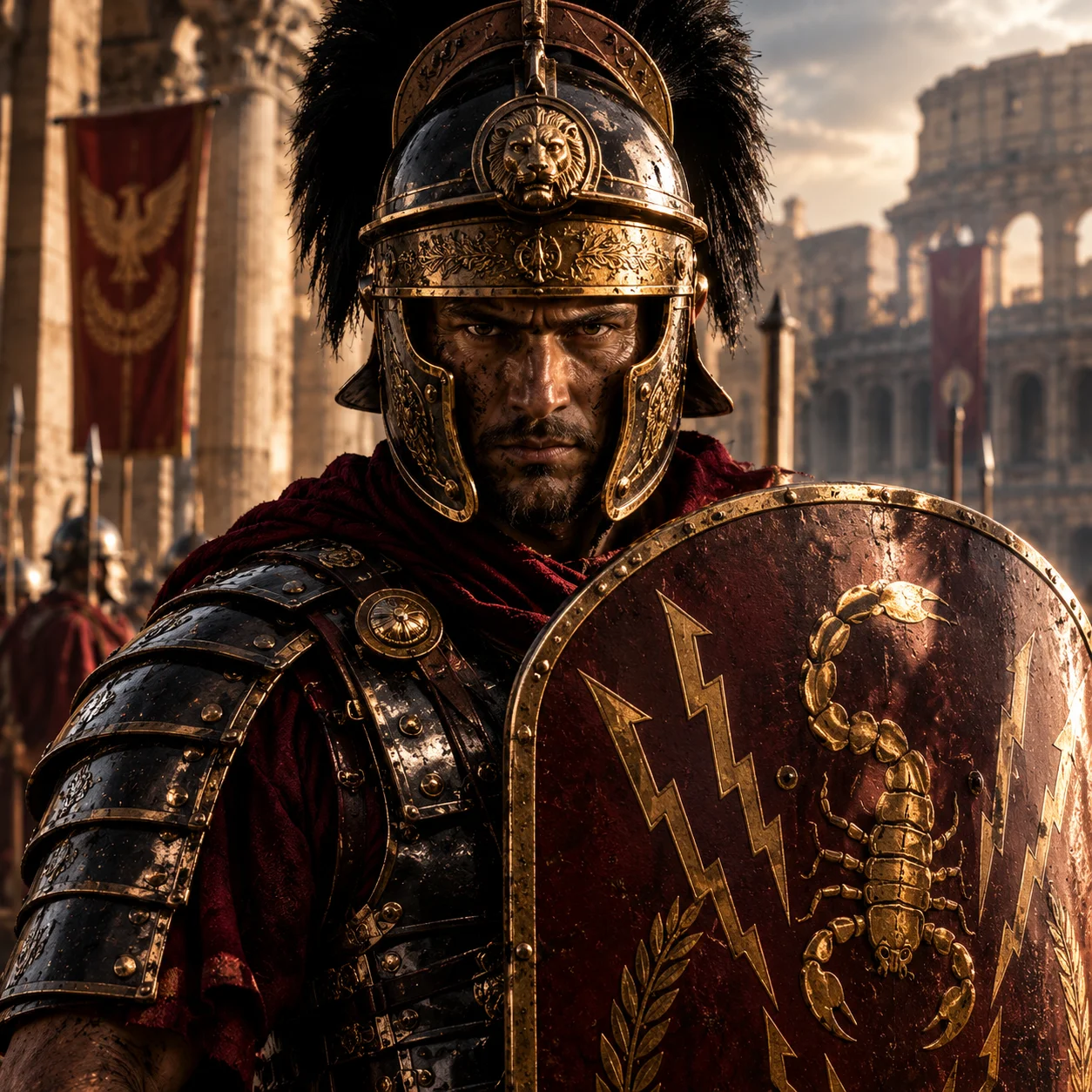
The Praetorian Guard: Shadow Masters and Enforcers of Imperial Rome
Behind the marble facade of classical Rome stood an armed brotherhood that answered to no ordinary law. For over three centuries, the praetorian guard operated as the premier political weapon of the empire. Originally conceived as an elite security force to protect the princeps, this formidable paramilitary organization quickly transformed into the ultimate kingmaker of the Mediterranean world.
The story of this roman elite bodyguard reveals how unchecked executive force can overpower the very state it was built to defend. At its peak, the praetorian guard could make or break emperors at the edge of a sword. From the palace corridors of the Palatine Hill to brutal clashes on frontier borders, their lethal efficiency governed Roman politics.
Understanding the full scope of praetorian guard history demands a hard look at their operational doctrine, psychological control, and institutional corruption. It is a story of extraordinary military skill surrendered to greed, extortion, and absolute power.
Table of Contents
Origins and Evolution: From Republican Field Escorts to Imperial Shock Troops
During the Roman Republic, successful generals recognized the need for an elite personal protection detachment while commanding in the field. Consuls and magistrates conducted campaigns from a central headquarters known as the praetorium. The soldiers assigned to guard this nerve center became known as the cohors praetoria.
These early units were temporary formations. When a campaign concluded and the general surrendered his command imperium, the cohort dissolved back into the civilian population or the general ranks. Julius Caesar relied heavily on his favored Tenth Legion as a personal tactical reserve, establishing the precedent for a loyalist bodyguard unit.
The permanent institution took shape under Augustus in 27 BC. Having emerged victorious from decades of civil slaughter, the first Roman emperor understood that republican traditions forbade armed military units within the sacred boundary of Rome, the pomerium.
Augustus walked a delicate political tightrope. He needed immediate, lethal protection against potential senatorial assassins, but he could not afford to look like a military despot.
To maintain this balance, Augustus established nine cohorts of roughly 500 men each. Crucially, he stationed only three cohorts within the civilian districts of Rome, dispersing the remaining six cohorts throughout nearby Italian towns.
Guardsmen deployed inside the capital wore civilian togas draped over their armor and concealed their short swords. This subtle disguise satisfied senatorial sensitivities while keeping armed protection within arm’s reach of the emperor.
[Republican Field Escort]
       │ (Temporary Wartime Unit)
       ▼
[Augustan Settlement (27 BC)]
       │ (9 Dispersed Cohorts; Toga-Concealed Weapons)
       ▼
[Tiberian Consolidation (AD 23)]
       │ (Sejanus builds the Castra Praetoria)
       ▼
[Permanent Praetorian Hegemony]
The transformation from discreet imperial watchdogs into an aggressive standing garrison occurred during the reign of Tiberius. In AD 23, the ambitious Praetorian Prefect Lucius Aelius Sejanus convinced the reclusive emperor to consolidate all nine cohorts into a single fortified compound on the northeastern edge of Rome.
Sejanus argued that gathering the men would improve military discipline, streamline communications, and deter urban unrest. In reality, it concentrated thousands of veteran shock troops in a single strike force, giving the prefect leverage over the Senate, the civilian populace, and the emperor himself.
Praetorian Cohort Organization and Daily Mechanics
The internal structure of the praetorian guard mirrored that of the regular military, but with significantly higher pay, shorter enlistment periods, and distinct privileges. The operational core of praetorian cohort organization consisted of infantry cohorts reinforced by a specialized cavalry component known as the equites singulares Augusti.
Under the Flavian emperors, the size of each cohort grew from 500 to roughly 1,000 men (cohortes milliariae). The total strength of the guard hovered between 8,000 and 10,000 personnel.
Each cohort was subdivided into six centuries led by seasoned centurions. These officers held higher status and earned far more than their counterparts in the frontier units.
Recruitment standards were rigorous. In the early imperial period, recruits were selected exclusively from native Italian families, primarily from Etruria, Umbria, and Latium. This policy was designed to guarantee geographic and cultural loyalty to Rome.
Guardsmen served sixteen years, whereas soldiers in the standard roman legions served twenty-five years on the frontiers. The base pay of a Praetorian was three times that of a regular legionary, reaching 750 denarii annually under Augustus and escalating steadily with successive emperors.
+---------------------------------------------------------+
|                  PRAETORIAN PREFECT                     |
|           (Equestrian Commander of the Guard)           |
+---------------------------------------------------------+
                             │
        ┌────────────────────┴────────────────────┐
        ▼                                         ▼
+────────────────---------------+ +────────────────---------------+
|     INFANTRY CENTURIES        | |   EQUITES SINGULARES AUGUSTI   |
|  - 10 Urban Cohorts (1,000 ea)| |  - Elite Cavalry Wing         |
|  - Speculatores (Intelligence)| |  - Mounted Recon & Escort     |
|  - Tesserarii & Cornicularii  | |  - Fast Pursuit Maneuvers     |
+-------------------------------+ +────────────────---------------+
The leadership hierarchy ran directly through the equestrian rank. Augustus established the office of Praetorian Prefect (praefectus praetorio) in 2 BC, deliberately excluding ambitious senators from commanding the unit.
The prefect became the second most powerful individual in the Roman world. Below the prefect served a staff of military tribunes, administrative clerks, intelligence couriers (speculatores), and standard-bearers.
These speculatores acted as an undercover secret police, monitoring senatorial speech, tracking suspected plots, and carrying out covert assassinations in the dead of night.
Arms, Armor, and Battlefield Tactics
Popular media often depicts the praetorian guard in ornate purple tunics and decorative ceremonial plate. Primary sources, including archaeological finds and the relief carvings on Trajan’s Column, reveal a far more practical reality.
When deployed on campaign, Praetorians wore battle kit nearly identical to standard legionary armor. Their gear included the lorica segmentata (laminated iron plate) or lorica hamata (chainmail), designed to withstand slashing strikes and blunt force trauma.
+-------------------------------------------------------------+
|             PRAETORIAN COMBAT EQUIPMENT PROFILE             |
+------------------------------+------------------------------+
| OFFENSIVE ARMAMENT           | DEFENSIVE PROTECTION         |
| - Gladius Hispaniensis       | - Lorica Segmentata / Hamata |
| - Pugio (Sidearm Dagger)     | - Attica-style Crested Helm  |
| - Pilum (Heavy Javelin)      | - Oval Scutum with Scorpion  |
+------------------------------+------------------------------+
Distinctive visual markers separated the Praetorian from the frontier soldier. When parading through Rome or guarding the Palatine, guardsmen carried oval shields (scuta) reminiscent of the Republican period, rather than the curved rectangular shields of the frontiers.
These shields were painted with unique heraldic iconography, most notably the scorpion, the astrological sign of Emperor Tiberius, who had built their headquarters. Their parade helmets featured elaborate Attic crests topped with dark plumes, designed to intimidate street mobs and conspirators.
In offensive maneuvers, the guard executed refined imperial rome military tactics. They fought as heavy shock infantry:
-
Javelin Volleys: At roughly twenty yards from the enemy line, the cohorts unleashed a disciplined volley of heavy pila, bending upon impact to drag down enemy shields.
-
Kinetic Shield Slam: Guardsmen crashed their brass-bossed shields into the enemy line, disrupting opposing footings.
-
Short Sword Thrusts: From behind this wall of wood and iron, Praetorians worked their gladii with short, upward thrusts into the soft tissue of the abdomen and groin.
Unlike frontier legions that spent years engaged in attrition warfare, the cohorts trained extensively for rapid shock counter-attacks. They were deployed as battlefield reserves to steady collapsing wings or strike an opponent’s flank with decisive violence.
The Castra Praetoria and the Urban Stronghold
The construction of the Castra Praetoria in AD 23 altered the urban geography of Rome. Located on the Viminal Hill just outside the Servian Wall, this massive fortress enclosed approximately 42 acres.
The installation featured high brick-faced concrete walls, defensive battlements, and four fortified gates that mirrored a permanent frontier legionary base. It held housing barracks, armories, granaries, and subterranean holding cells.
       [ North Gate: Porta Principalis Sinistra ]
                     ┌───────────┐
                     │  Armory   │
                     │  Barracks │
[ West Gate ]        │ Granaries │        [ East Gate ]
Porta Praetoria  ────┤ Tribunal  ├────    Porta Decumana
                     │ Headquarters
                     │ Detention │
                     └───────────┘
       [ South Gate: Porta Principalis Dextra ]
The presence of the camp transformed civil life in the capital. The fortress held up to 10,000 heavily armed men within an hour’s march of the Roman Forum and the imperial palaces.
For the average citizen, the high walls served as a constant reminder that the republic was gone. The Senate might conduct debates and pass resolutions, but real authority resided in the fortress on the Viminal.
The fortress also functioned as a self-sufficient military command center. It contained an independent water supply, weapons workshops, and administrative offices that processed records from across the empire.
When urban riots erupted over grain shortages or excessive taxes, the prefect could open the iron-studded gates of the camp and deploy entire cohorts in full battle array into the streets, crushing civilian resistance with brutal efficiency.
Political Assassinations and Emperor Auctioning
The greatest paradox of the praetorian guard lay in their primary purpose. Designed to preserve the life of the princeps, they became the greatest threat to his survival. Over their 300-year history, the guardsmen planned, executed, or participated in the murder of more than a dozen Roman emperors.
The first major assassination came in AD 41. Gaius Caesar, known as Caligula, had systematically insulted and humiliated the officers of the guard. Cassius Chaerea, a tribune of the guard whom Caligula repeatedly mocked with crude insults, led a conspiracy of senior officers.
Chaerea cornered the young emperor in a subterranean corridor beneath the imperial palace and drove his sword into Caligula’s neck, while other guardsmen hacked him to pieces.
[Caligula Assassinated (AD 41)] ──► Guards Discover Claudius Behind Curtain
                                               │
                                               ▼
[Donativum Demanded] ◄────────────── Claudius Crowned Emperor
Following the assassination, guardsmen swept through the palace looting valuables. Behind a heavy hanging drape, a soldier discovered Caligula’s trembling uncle, Claudius, hiding in fear of his life.
Instead of killing him, the soldiers recognized a financial opportunity. They carried Claudius to the Castra Praetoria and proclaimed him emperor.
In return, Claudius promised a massive cash gift (donativum) of 15,000 sesterces per man. This exchange set a disastrous precedent: the imperial purple could now be purchased from the guard through armed extortion.
This dynamic reached its lowest point during the Year of the Five Emperors in AD 193. After murdering the eccentric Emperor Pertinax for attempting to restore military discipline, the guardsmen retreated inside their fortified compound and announced that the throne was for sale to the highest bidder.
Two wealthy senators rushed to the camp walls to outbid one another. Didius Julianus won the auction by promising 25,000 sesterces to every single guardsman.
The Senate, intimidated by the swords of the guard, confirmed the transaction. Julianus reigned for only 66 days before frontier legions marched on Rome, deposed him, and executed him in his palace bathroom.
Comparative Breakdown: Praetorian Cohorts vs. Roman Legions
The political rift between the guard and the regular army was deep and persistent. Regular soldiers spent decades living in wooden barracks along the Rhine and Danube, fighting Germanic tribes, digging drainage trenches, and eating rough grain rations.
By contrast, the Praetorians lived in the Mediterranean capital, wore clean cloaks, and drew higher wages for far less physical labor. The following table contrasts these two military systems:
| Operational Feature | The Praetorian Guard | Standard Roman Legions |
| Command Structure | Praetorian Prefect (Equestrian Rank) | Legatus Legionis (Senatorial Rank) |
| Term of Service | 16 Years | 25 Years (Plus Reserve Duty) |
| Base Annual Salary | 750 to 1,000+ Denarii | 225 to 300 Denarii |
| Discharge Bonus | 5,000 Denarii + Italian Land | 3,000 Denarii + Frontier Land Grant |
| Primary Shield Type | Oval Republican-Style Scutum | Rectangular Semi-Cylindrical Scutum |
| Main Mission Profile | Palace Protection, Espionage, Urban Control | Frontier Defense, Siegecraft, Foreign Conquest |
| Living Conditions | Urban Fortress in Rome with City Baths | Frontier Forts, Marching Camps, Hostile Borders |
| Political Alignment | Palace Bureaucracy and Bribes | Frontier Generals and Provincial Identity |
Strategic Vulnerabilities and Organizational Flaws
Despite their reputation, the praetorian guard suffered from critical strategic weaknesses that worsened over the centuries. Their proximity to the imperial palace insulated them from the realities of broad-scale campaign warfare.
Over decades of urban living, the edge that made their Augustan forebears so effective gradually deteriorated.
The Problem of the Donativum
The financial burden of the guard became unsustainable. By the second century, no emperor could ascend the throne without distributing an exorbitant donativum.
If an emperor ran short on cash, the guard turned hostile. This economic extortion drained the imperial treasury, forcing emperors to debase silver currency (denarius and antoninianus) to pay their security bills.
The guard functioned less like a patriotic military formation and more like an organized protection ring that collected bribes from its own government.
Friction with Frontier Armies
The frontier legions resented the guard’s inflated pay and political influence. When provincial troops learned that a cabal in Rome had appointed a new emperor without their consent, they routinely revolted and declared their own generals as rival Augusti.
This dynamic sparked devastating civil wars, including the crisis of AD 69 and the widespread anarchy of the third century. The guard was large enough to intimidate the Senate, but too small to hold off four veteran legions marching down from the Danubian frontier.
Frontier Legions Revolt (Rhine / Danube)
               │
               ▼
March on Rome to Overturn Palace Coup
               │
               ▼
Praetorian Defeat in Field Battles
Common Historical Misconceptions
Modern films and fiction have built a mythology around the Praetorians that distorts the historical record. Examining the primary archaeological evidence clears away these common exaggerations.
Myth 1: Praetorians Never Fought in Foreign Wars
A common myth claims that the guard spent their entire history lounging inside the taverns of Rome, avoiding combat.
While garrison duty was their primary function, Praetorian cohorts served as elite tactical reserves in numerous campaigns.
They fought in the Marcomannic Wars under Marcus Aurelius, deployed to Mesopotamia under Septimius Severus, and played a decisive combat role during Trajan’s conquest of Dacia. Their names appear on military gravestones throughout the frontier provinces.
Myth 2: They Exclusively Wore Purple Cloaks and Armor
Hollywood productions almost universally outfit the guard in royal purple tunics and enameled black plate armor.
In reality, Tyrian purple dye was extraordinarily expensive and reserved almost exclusively for the emperor’s clothing and the stripes on senatorial togas.
Praetorians generally wore undyed wool, madder-dyed red tunics, or off-white garments that matched the rest of the Roman military. Their armor was polished iron and bronze, kept clean to prevent rust in the humid Italian climate.
Myth 3: The Entire Guard Was Abolished and Rebuilt by Septimius Severus
Some histories claim Septimius Severus eliminated the guard entirely in AD 193. In truth, Severus merely purged the personnel.
Disgusted by their sale of the empire to Didius Julianus, Severus lured the existing Italian guardsmen unarmed to his camp outside Rome, surrounded them with his Danubian legions, and stripped them of their honors, daggers, and belts.
He then refilled the cohorts with his own battle-hardened frontier veterans from Illyricum and the Danube. The institution remained intact, but its demographic shifted from Italian recruits to provincial soldiers.
The Final Stand: Milvian Bridge and Abolition
The downfall of the praetorian guard arrived in the early fourth century. During the chaotic civil wars of the Tetrarchy, the usurper Maxentius took control of Italy and Rome.
To secure his position against rival claimants, Maxentius relied heavily on the remaining Praetorian cohorts, who recognized that their privileges were tied to his survival.
In October AD 312, Constantine the Great marched an army of veterans down from Gaul to reclaim Italy. The two forces met just north of Rome at the Battle of the Milvian Bridge.
Maxentius had drawn up his battle line with his back to the Tiber River. When Constantine’s cavalry smashed into the flanks of Maxentius’s army, the front lines broke and retreated toward the river.
Constantine's Gallic Cavalry Charge
                 │
                 ▼
Flanks Break ──► Maxentius Trapped Against the Tiber
                 │
                 ▼
Praetorians Form Iron Perimeter ──► Annihilation in Place
While the rest of the army fled into the water, where thousands drowned—including Maxentius—the praetorian guard refused to retreat. Hemmed in against the riverbanks, they locked their shields and fought down to the last man.
Their discipline held to the end. Contemporary accounts noted that their bodies covered the exact positions where they had formed their defensive battle lines.
Constantine moved decisively to ensure no future emperor would face an armed praetorian coup. In AD 312, he issued a formal decree abolishing the institution.
His engineers systematically pulled down the outer walls of the Castra Praetoria facing away from the city, disarming the fortress.
The surviving guardsmen were reassigned to frontier garrisons along the Rhine and Danube, where they spent the remainder of their careers building defensive palisades. After 339 years, the shadow masters of the Roman Empire ceased to exist.
Frequently Asked Questions
What was the main purpose of the Praetorian Guard?
Their original purpose was to protect the person and household of the Roman emperor, preserve public order in Italy, and act as a mobile tactical reserve during military crises. Over time, their mission expanded into domestic espionage, tracking senatorial conspiracies, running clandestine intelligence operations, and enforcing imperial decrees through force.
How much was a Praetorian Guard paid compared to a legionary?
Under Augustus, a Praetorian received 750 denarii per year, which was more than three times the 225 denarii earned by a standard frontier legionary. By the reign of Caracalla, this pay rose to over 2,500 denarii annually. Praetorians also received frequent cash bonuses (donativa) upon the accession of a new emperor and served for only sixteen years compared to twenty-five years for legionaries.
Did the Praetorian Guard ever fight alongside normal legions?
Yes. Praetorians deployed as elite reserve shock units during major military expeditions. They saw intense combat alongside regular legions during Trajan’s Dacian Wars, Domitian’s campaigns against the Chatti, Marcus Aurelius’s operations along the Danube, and the Persian campaigns of Caracalla and Severus Alexander.
Who was the most powerful Praetorian Prefect?
Lucius Aelius Sejanus, who served under Emperor Tiberius, was the most powerful prefect in Roman history. By concentrating all nine cohorts into the Castra Praetoria in Rome, Sejanus became the administrative ruler of the capital. He directed purges of the imperial family and eliminated political rivals until Tiberius discovered his plot and had him executed in AD 31.
Why did the Praetorians wear an oval shield instead of a rectangular one?
On urban duty and ceremonial parade inside Rome, guardsmen carried an oval shield (scutum) reminiscent of the late Roman Republic. This archaic styling was a deliberate nod to ancient traditions, honoring the era when the princeps was viewed as a first among equals rather than an absolute monarch. On foreign military campaigns, they used standard rectangular legionary shields.
How were recruits selected for the Guard?
During the first two centuries of the empire, recruits were drawn exclusively from aristocratic and land-owning families in central and northern Italy. Candidates required letters of recommendation from influential patrons, proof of Roman citizenship, impressive physical stature, and a spotless moral record. This Italian monopoly ended under Septimius Severus, who opened recruitment to veteran soldiers from the Danubian frontier.
What was the Castra Praetoria?
The Castra Praetoria was a massive, 42-acre fortified military camp built on the northeastern outskirts of Rome in AD 23. It housed all cohorts of the guard, along with cavalry stables, armories, granaries, and administrative centers. Its high brick walls served as a permanent reminder to the Senate and civilian populace that armed imperial force controlled the capital.
Who finally destroyed the Praetorian Guard?
Emperor Constantine the Great permanently disbanded the unit in AD 312 following his victory over Maxentius at the Battle of the Milvian Bridge. Constantine demolished the camp’s defensive walls, abolished the title of Praetorian Prefect as a military rank, and dispersed the surviving guardsmen across frontier legions along the empire’s outer borders.
The Legacy of Roman Militarism
The story of Rome’s palace enforcers endures as history’s clearest case study in the perils of military praetorianism. When an executive bodyguard unit is granted unchecked political autonomy, its focus shifts from external protection to internal survival, profit, and control.
The institutional corruption that hollowed out the Roman state did not begin on the barbarian frontiers; it took root within the fortified barracks of the capital.
By subordinating loyalty to financial bribes, the cohorts undermined the stability of the empire they were sworn to protect, leaving behind a cautionary tale about the cost of relying on domestic military force