
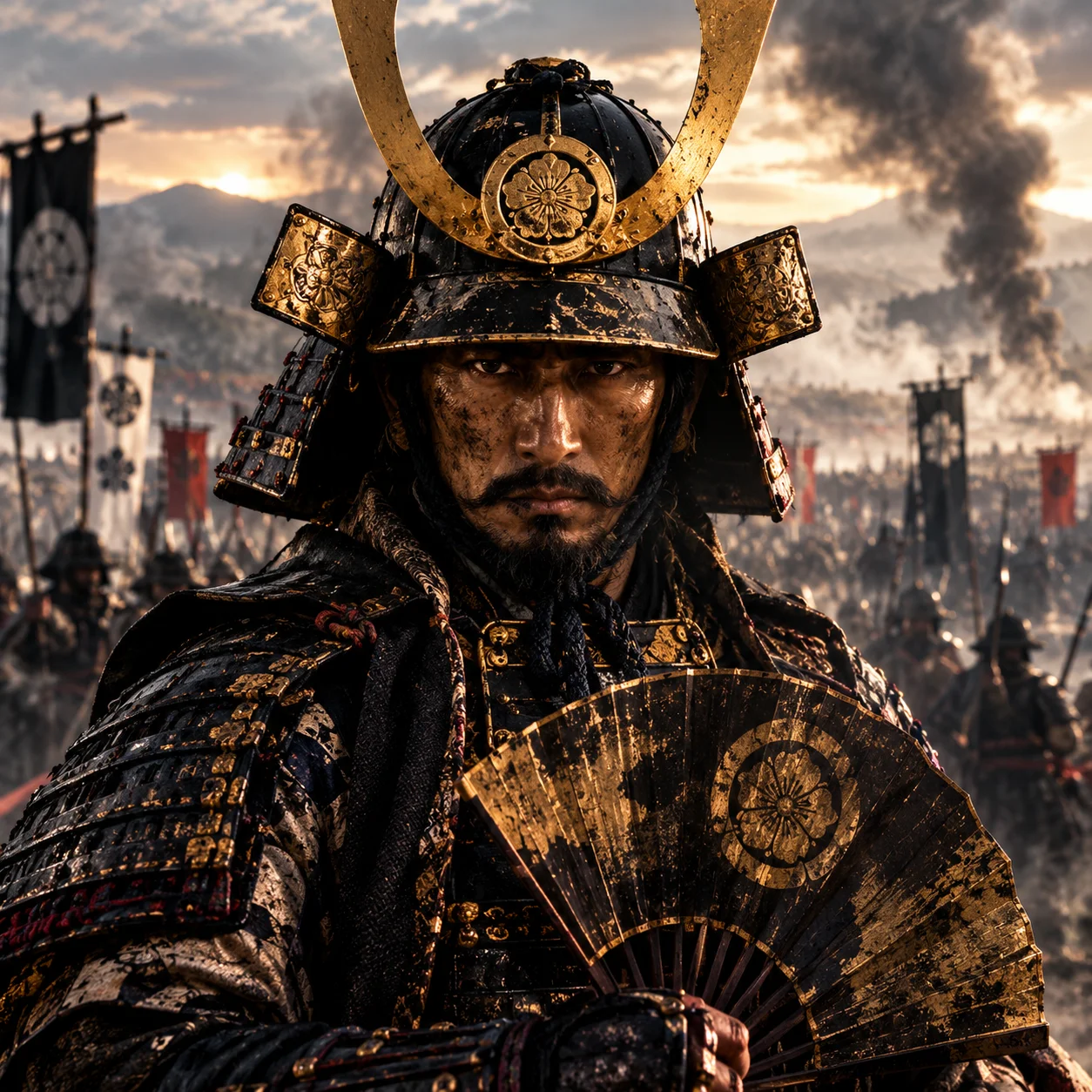
Battle of Sekigahara: The Bloody Six-Hour Clash That Forged Modern Japan
On the damp, fog-choked morning of October 21, 1600, over 160,000 warriors collided in a narrow mountain valley in central Japan. This titanic showdown, known as the battle of sekigahara, brought an explosive conclusion to more than a century of unrelenting civil warfare. By noon, mud, blood, and gunpowder smoke covered the valley floor. By mid-afternoon, the political map of feudal Japan changed forever.
The battle pitted two massive coalitions against each other in a struggle for supreme control of the realm. On one side stood the Eastern Army, commanded by the cunning warlord Tokugawa Ieyasu. On the other stood the Western Army, nominally defending the heir of the late ruler Toyotomi Hideyoshi, organized by the unyielding court bureaucrat Ishida Mitsunari.
Beyond the clash of armored titans, this engagement reshaped social structures, military strategy, and national governance. The outcome shattered the chaotic Sengoku period and paved the way for lasting peace under the Tokugawa shogunate.
Table of Contents
-
Mobilization and Armies: Military Doctrine of the Sengoku Jidai Samurai
-
How Long Did the Battle of Sekigahara Last? A Hour-by-Hour Timeline
The Political Vacuum: Collapse of the Toyotomi Hegemony
The road to the battle of sekigahara began with the death of Toyotomi Hideyoshi in September 1598. Hideyoshi had unified Japan under a single sword, yet his death left a fragile succession structure. His only surviving heir, Toyotomi Hideyori, was merely five years old.
Aware of the danger this power vacuum created, Hideyoshi established a governing body called the Council of Five Elders (Go-Tairo). He chose five of the most powerful territorial lords (daimyo) to rule collectively until Hideyori reached adulthood. Tokugawa Ieyasu, the master of the fertile Kantō region, held the largest landholding and the greatest military force among them.
Hideyoshi also appointed five administrative commissioners (Go-Bugyō) to manage civil governance, legal codes, and tax revenues. Chief among these bureaucrats was Ishida Mitsunari, a brilliant administrator of unbending loyalty to the Toyotomi clan.
                    [ Toyotomi Hideyoshi ]
                     (Passed Away in 1598)
                              |
                     [ Toyotomi Hideyori ]
                        (Five-Year-Old Heir)
                              |
        +---------------------+---------------------+
        |                                           |
[ Council of Five Elders ]               [ Five Commissioners ]
 (Led by Tokugawa Ieyasu)                 (Led by Ishida Mitsunari)
        |                                           |
  Pragmatic Military Warlords               Civil Administrators & Loyalists
Friction surfaced between the military commanders who bled on the battlefields of Korea and the civilian administrators who audited their supplies and criticized their performance. Commanders such as Fukushima Masanori, Kato Kiyomasa, and Kuroda Nagamasa despised Mitsunari. They viewed him as an arrogant court sycophant who questioned their courage while sitting comfortably behind an inkstone.
Ieyasu capitalized on these internal rifts. He arranged political marriages without the council’s consent, formed private alliances, and positioned himself as a protector of the aggrieved military captains.
When Maeda Toshiie, the sole elder respected enough to restrain both factions, died in 1599, the fragile peace shattered. Seven martial commanders attempted to assassinate Mitsunari in Osaka. In an extraordinary political maneuver, Mitsunari fled directly to Ieyasu’s residence for sanctuary.
Ieyasu protected Mitsunari from immediate execution but forced him to resign his administrative post and retire to Sawayama Castle. With his sharpest bureaucratic critic sidelined, Ieyasu assumed de facto control of Osaka Castle and the Toyotomi treasury.
The final spark ignited in the spring of 1600. Uesugi Kagekatsu, an elder based in northern Aizu, began massing troops and fortifying border checkpoints. When Ieyasu summoned him to Kyoto to explain his actions, the Uesugi clan issued an insolent response.
Ieyasu mobilized a massive coalition of lords and marched north to punish the Uesugi. This movement pulled Ieyasu hundreds of miles away from western Japan.
Mitsunari saw his opportunity. Returning from retirement, he rallied anti-Tokugawa lords, secured the backing of the influential Mōri clan, and declared Ieyasu an outlaw rebel against the young Hideyori. Mitsunari quickly seized Fushimi Castle in a bloody siege, drawing the battle lines across the Japanese archipelago.
Mobilization and Armies: Military Doctrine of the Sengoku Jidai Samurai
The forces assembled for the campaign represented the pinnacle of late-sixteenth-century Japanese military organization. The sengoku jidai samurai had spent generations perfecting combined-arms warfare. Armies were no longer undisciplined bands of elite mounted archers engaged in individual duels; they functioned as integrated, professional fighting machines.
Both the Eastern and Western armies utilized a layered hierarchy:
-
High Command (Honjin): The daimyo and his senior retainers directed movements using signal batons (saihai), conch horns (horagai), and war drums (taiko).
-
Mounted Samurai (Kiba-musha): Elite armored warriors acting as shock cavalry, counter-assault units, and mobile commanders.
-
Foot Conscripts and Regulars (Ashigaru): Disciplined peasant infantry organized into specialized companies of pike, firearm, and bow units.
+-------------------------------------------------------+
|              DAIMYO COMMAND HEADQUARTERS               |
|      (Signal Batons, War Drums, Banner Attendants)     |
+-------------------------------------------------------+
                           |
        +------------------+------------------+
        |                                     |
+-------------------+             +---------------------+
|  MOUNTED SAMURAI  |             |  ASHIGARU INFANTRY  |
|  - Shock Cavalry  |             |  - 5m Pike Walls    |
|  - Counter-Assault|             |  - Matchlock Gunners|
|  - Battlefield Recon            |  - Arrow Support    |
+-------------------+             +---------------------+
The backbone of each army rested on the shoulders of the ashigaru. They wielded massed yari (heavy long pikes) measuring between 4.5 and 5.5 meters in length. These units stood shoulder-to-shoulder, striking down in rhythmic, synchronized waves to crush advancing cavalry and break infantry lines.
Backing the pike walls were gunner companies (teppo-gumi) equipped with Tanegashima matchlock firearms. First introduced by Portuguese traders in 1543, matchlocks became the decisive instrument of Japanese warfare. Warlords manufactured thousands of standardized firearms, training gunners to fire rolling, synchronized volleys from behind portable wooden mantlets (tate).
Battlefield identification proved critical for organizational control. Each warrior wore a vertical back banner called a sashimono, decorated with his clan’s heraldic crest (mon).
These symbols identified friends from foes amidst the dense smoke of black powder. The Eastern coalition displayed the trefoil hollyhock crest of the Tokugawa alongside the feather and ring badges of their allies. The Western forces raised the characters and paulownia symbols of the Toyotomi, Ishida, and Mōri clans.
In total numbers, the Western Army assembled roughly 80,000 to 120,000 men throughout the region. The Eastern Army rallied an estimated 75,000 to 88,000 soldiers.
Yet sheer troop numbers masked a severe flaw within the Western coalition: unity of command did not exist. Mitsunari was a middle-ranking daimyo holding only 194,000 koku of rice revenue. He lacked the social pedigree and military prestige to command veteran grand lords who controlled territories four times larger than his own.
To compensate, Mitsunari appointed Mōri Terumoto as supreme commander. However, Terumoto remained behind to guard Hideyori at Osaka Castle, leaving his cousin Mōri Hidemoto to lead the clan’s forces on the battlefield.
By contrast, the Eastern Army possessed an undisputed generalissimo. Every commander in the Eastern coalition answered directly to Tokugawa Ieyasu, whose tactical competence and immense private wealth commanded absolute obedience.
Strategic Geography of the Sekigahara Basin
The geographic theater of the conflict was the Sekigahara pass, a narrow, bowl-like basin situated within modern Gifu Prefecture. This mountain corridor had served as a primary bottleneck in Japanese logistics for centuries.
Two critical highways met in the basin: the Nakasendō, which linked Kyoto to the northern Kantō plains, and the Hokuriku road, extending north toward the Sea of Japan. By controlling Sekigahara, a general could bottle up east-west transit, starve an advancing army of food, and dictate the terms of engagement.
                         [Mount Sasao]
                     (Ishida Mitsunari HQ)
                              |
[Mount Tenman]                v                  [Nakasendō Highway]
(Western Right Flank)   <<< DEADLOCK >>>        (Eastern Infiltration)
                              ^
                              |
                     [Mount Matsuo]
                (Kobayakawa Hideaki - 15,000)
                              |
                       [ Mount Nangū ]
                 (Mōri & Kikkawa - Traitor Block)
The basin was ringed by formidable topographic features:
-
Mount Sasao guarded the northern edge. Ishida Mitsunari chose this promontory for his headquarters, erecting rows of sharpened wooden palisades (bokusaku) and earthworks across its southern slope.
-
Mount Tenman anchored the western flank, where Ukita Hideie arrayed his veteran samurai.
-
Mount Matsuo dominated the southern heights, overlooking the central valley floor. This peak was occupied by the young lord Kobayakawa Hideaki and his 15,000 elite troops.
-
Mount Nangū loomed southeast, behind the rear positions of the Eastern Army, where massive Western contingents under Mōri Hidemoto and Kikkawa Hiroie sat entrenched.
On October 20, 1600, torrential autumn rain turned the low-lying farmlands of the basin into a deep quagmire. Paddies overflowed, drainage ditches filled with brown water, and the roads deteriorated into thick mud.
The Western forces held superior defensive positions. They formed a tight, three-sided crescent that encircled the eastern entrance of the pass. If every Western commander fought faithfully, Ieyasu’s army would march into a crossfire, with Mitsunari attacking from the north, Ukita from the west, and Kobayakawa charging downhill from the south to sever the Eastern supply lines.
Ieyasu recognized the tactical hazard. Yet he also possessed secret intelligence: private agreements made through letters and hostages that assured him key Western commanders would not draw their swords against him.
How Long Did the Battle of Sekigahara Last? A Hour-by-Hour Timeline
One of the most frequent questions regarding this clash is: how long did the battle of sekigahara last? Despite the participation of over 160,000 combatants across miles of terrain, the core struggle lasted approximately six hours.
The actual combat erupted around 8:00 AM on the morning of October 21 and collapsed into a rout by 2:00 PM. The timeline reveals how quickly a battle of this scale shifted from tactical stalemate to total slaughter.
08:00 AM  Fog clears; Fukushima Masanori crashes into Ukita Hideie
09:00 AM  Gunpowder volleys shake the valley; Otani repels Todo and Kyogoku
10:00 AM  Deadlock across all sectors; Western lines hold firm
11:00 AM  Mitsunari lights signal fire; Mount Matsuo and Mount Nangū remain motionless
12:10 PM  Tokugawa fires arquebus volleys at Mount Matsuo
12:30 PM  Kobayakawa Hideaki betrays Western Army, charges down Mount Matsuo
01:15 PM  Otani Yoshitsugu's division destroyed; Otani commits seppuku
02:00 PM  Western Army collapses; Shimazu fights suicidal rear-guard retreat
08:00 AM – 10:00 AM: The Lifting Fog and Initial Collision
At dawn, an impenetrable autumn mist blanketed the valley floor. Soldiers could not see ten paces ahead. Men stood freezing in damp armor, listening to the clanking of weapon scabbards and the distant rumble of the Fuji River.
Around 8:00 AM, a sudden cold wind swept down from the northern peaks, tearing the mist away. The two armies suddenly found themselves looking directly into one another’s eyes across open mud flats.
Without waiting for Ieyasu’s direct order, Eastern vanguard commander Fukushima Masanori hurled his 6,000 shock troops toward the Western center, held by Ukita Hideie. Simultaneously, Ii Naomasa led his elite shock division, known as the “Red Devils” for their brilliant crimson-lacquered armor, past Fukushima’s flank to engage Ukita’s skirmishers.
The collision was ferocious. Matchlock fire ripped through the ranks, followed immediately by the splintering crunch of colliding pike units.
To the south, Eastern contingents under Todo Takatora and Kyogoku Takatomo assaulted the entrenched positions of Otani Yoshitsugu. Despite suffering from severe illness that left him nearly blind and confined to a litter, Otani repulsed repeated assaults, routing Todo’s lead battalions with counter-volleys of musket fire.
10:00 AM – 12:00 PM: The Grinding Stalemate and Silent Reserves
By 10:00 AM, the combat had spread along the entire central front. The Western coalition fought with ferocity. Ukita’s men pushed Fukushima backward, while Mitsunari’s defensive lines on Mount Sasao raked Eastern units with cannon fire and five-shot rolling volleys.
Seeing an opening to encircle and crush Ieyasu’s forward divisions, Mitsunari lit a massive bonfire. This was the prearranged visual signal for all Western allied forces to close the trap.
He expected Kobayakawa Hideaki to charge off Mount Matsuo into Ieyasu’s left flank, while Mōri Hidemoto struck Ieyasu’s vulnerable rear from Mount Nangū.
Nothing happened.
On Mount Nangū, the vanguard commander Kikkawa Hiroie had entered a secret pact with Ieyasu. When Mōri Hidemoto prepared his troops to advance, Kikkawa blocked the road, sending messengers back with the excuse that his men were “eating their midday meal.” The entire southern Western force remained immobilized.
Higher up on Mount Matsuo, Kobayakawa Hideaki stared down at the carnage. He had pledged loyalty to both sides in the weeks leading up to the clash. Paralyzed by indecision, the 23-year-old warlord ignored Mitsunari’s signal fires and refused to move his 15,000 fresh samurai.
12:10 PM: Tokugawa’s Bold Psychological Strike
By noon, Ieyasu grew furious. The Eastern Army was exhausting its ammunition and taking heavy casualties against Ukita and Mitsunari. If Kobayakawa decided to honor his original oath to the Toyotomi, the Eastern Army faced annihilation.
Ieyasu moved his personal command post (honjin) hundreds of yards forward into open ground, placing himself within range of enemy arquebuses to restore confidence along his front lines.
He then ordered a daring tactical provocation: his personal matchlock gunners aimed their weapons up at Kobayakawa’s lines on Mount Matsuo and fired several rolling volleys.
This was not an assault; it was an ultimatum. The gunfire signaled to Kobayakawa that Ieyasu would tolerate no further delay, forcing the young lord to choose his allies immediately.
                   [Mount Matsuo: Kobayakawa HQ]
                                 |
           "Join us or die."     | (Indecision)
           [Gunfire Fired Up]    |
                                 v
        [Tokugawa Command] ------------> SUDDEN RESOLVE!
                                         Downhill assault begins
12:30 PM – 02:00 PM: The Betrayal and Western Collapse
The psychological gambit worked. Shaken by the gunfire, Kobayakawa ordered his banners forward. The kobayakawa hideaki betrayal altered history in a matter of minutes. His 15,000 fresh warriors charged down Mount Matsuo.
They did not strike the Eastern Army. They slammed straight into the exposed right flank of Otani Yoshitsugu.
Otani had anticipated the possibility of treason. He had positioned several hundred samurai facing the mountain behind protective wooden palisades.
When Kobayakawa’s troops crashed into the base of the hill, Otani’s reserve counter-attacked with ferocity, driving Kobayakawa’s lead units back up the slopes.
However, seeing Kobayakawa commit to Ieyasu, four other vacillating Western units under Wakisaka Yasuharu, Ogawa Suketada, Akaza Naoyasu, and Kutsuki Mototsuna immediately defected as well.
Outnumbered six to one and attacked from three directions, Otani’s line disintegrated. To preserve his honor, Otani commanded his retainer to decapitate him and bury his head in the marsh so the enemy could not claim it as a trophy.
With Otani destroyed, the Western flank caved in completely. Eastern and turncoat troops rolled up Ukita’s flank, sending his remaining samurai fleeing into the western mountains.
On Mount Sasao, Ishida Mitsunari watched his coalition vanish. As Eastern samurai stormed the palisades, Mitsunari abandoned his command tent and escaped into the northern wilderness.
By 2:00 PM, organized Western resistance had dissolved, leaving only the Shimazu clan of Satsuma holding an isolated pocket in the center of the valley floor. In an audacious maneuver, Shimazu Yoshihiro refused to surrender, charging straight through Ieyasu’s forward lines to break out toward the southern coast.
Although Shimazu lost most of his rear guard, he escaped, leaving Ieyasu in complete possession of the battlefield.
Weaponry and Tactical Mechanics of the Battle of Sekigahara
The battle of sekigahara tactics showcased an intricate synthesis of European gunpowder technology and traditional samurai martial systems. The combat proved that gunpowder had permanently transformed feudal warfare.
+-------------------------------------------------------------+
|                TACTICAL COMBAT MATRIX                       |
+------------------------------+------------------------------+
| TANEGASHIMA MATCHLOCK        | YARI PIKE UNITS              |
| - Massed, synchronized fire  | - 5-meter wall of wood/steel |
| - Anti-cavalry deterrence    | - Heavy overhead downward chop|
| - High lethality at 50 paces | - Formational momentum       |
+------------------------------+------------------------------+
| NIHONTO (KATANA / WAKIZASHI) | HEAVY FIELD ARTILLERY        |
| - Close-in grapple defense   | - Wooden & bronze cannons    |
| - Execution and decapitation | - Psychological shock value  |
| - Narrow space utility       | - Palisade demolition        |
+------------------------------+------------------------------+
Firearm Volley Tactics (Ashigaru Teppo)
The primary offensive driver during the early phases of the battle was the Tanegashima matchlock. These smoothbore, muzzle-loading weapons fired lead balls capable of piercing steel breastplates (dō) at ranges under 50 meters.
Commanders deployed matchlock gunners in rotating ranks behind sloped bamboo and timber mantlets. While the front rank knelt, fired, and adjusted their sights, the second and third ranks cleaned powder fouling, rammed charges, and prepared glowing slow matches.
This rolling fire disrupted infantry advances before hand-to-hand combat began. The Western Army also deployed several bronze breech-loading cannons and crude wooden swivel guns acquired through European trade, which battered the Eastern lines near Mount Sasao.
Pike Wall Defense and Shock Actions
Once firearm volleys softened the opponent’s formation, the ashigaru yari-gumi advanced. Feudal commanders did not use long pikes exclusively for thrusting; instead, they deployed them in collective downward strikes.
Dozens of ashigaru raised their 5-meter pikes simultaneously and brought them crashing down onto the helmets and shoulders of advancing infantry. This wall of steel points created an impenetrable perimeter that denied enemy cavalry any opportunity to break through.
Close-Quarters Samurai Combat
When formations shattered, individual close-quarters fighting erupted. Warriors discarded long spears and drew short polearms (naginata), curved utility blades, or their secondary short swords (wakizashi).
The katana served primarily as a weapon of last resort and personal defense. In dense, mud-slicked scuffles, combatants grappled directly with opponents, using specialized wrestling techniques (yoroi-kumiuchi) to throw armored adversaries into the mud before driving daggers (tantō) through unarmored gaps in the neck, armpits, or groin.
Comparative Force Analysis: Eastern Army vs. Western Army
The outcome of the confrontation hinged directly on differences in command authority, troop morale, strategic geography, and battlefield intelligence. The following comparison breaks down the internal structures of both forces:
| Analytical Category | Eastern Army (Tokugawa Ieyasu) | Western Army (Ishida Mitsunari) |
| Nominal Commander | Tokugawa Ieyasu | Mōri Terumoto (absent); Ishida Mitsunari (field) |
| Effective Battlefield Strength | ~75,000 – 88,000 warriors | ~80,000 – 120,000 (only ~35,000 actively fought) |
| Primary Weapon Systems | Tanegashima matchlocks, 5m yari, cavalry shock units | Entrenched matchlocks, yari walls, field culverins |
| Geographic Disposition | Lowland valley floor; vulnerable to encirclement | Crescent formation commanding high ridgelines |
| Strategic Strengths | Unified command, high morale, deep intelligence network | Superior terrain, numerical advantage, interior lines |
| Critical Weaknesses | Exposed supply routes; high risk of multi-front crossfire | Fragmented command, low trust, catastrophic defections |
| Tactical Deciding Factor | Decisive resolve; intimidation of hesitant allies | Treason of Kobayakawa and paralysis of Mōri forces |
Actionable Strategic Lessons From Sekigahara
The historical events at Sekigahara offer enduring lessons in leadership, operational planning, and human psychology. Historians and military analysts still examine these critical takeaways:
1. Unity of Command Trumps Numerical Superiority
The Western coalition outnumbered the Eastern forces on paper. Yet, they lacked a clear chain of command.
Mitsunari could not issue direct orders to allied warlords without negotiation. Ieyasu, on the other hand, exercised absolute authority. He resolved tactical disputes instantly, ensuring his units supported one another under fire.
In any complex enterprise, shared responsibility without a decisive leader leads to paralysis under pressure.
2. A Passive Ally Is a Hidden Opponent
Ishida Mitsunari based his campaign plan on the assumption that nominal allies would fulfill their oaths once combat began. This proved to be a fatal miscalculation.
Units that fail to advance when ordered drain the morale of forward lines and expose vulnerable flanks. In organizational leadership, uncommitted partners are often more dangerous than declared adversaries.
3. Decisive Action Forces Clarity
Ieyasu’s decision to fire on Kobayakawa’s positions on Mount Matsuo remains one of the boldest gambles in military history.
By sending lead balls over the heads of uncommitted troops, Ieyasu eliminated Kobayakawa’s ability to remain neutral. He forced the young commander to make an immediate, irrevocable choice.
True leaders understand that when uncertainty threatens success, bold action breaks gridlock.
4. Logistics and Espionage Win Campaigns Long Before Battle
Ieyasu did not win the battle merely through maneuvers in the mud of Sekigahara. He won it months earlier via his ink brush.
He dispatched hundreds of personal letters to Western lords, guaranteeing their lands, pardoning previous slights, and driving wedges between rival clans. When the armies met, the battle’s outcome had already been arranged through diplomacy and covert intelligence.
5. Tactical Flexibility Outweighs Rigid Formations
The Western Army occupied superior defensive terrain on high ground, with fortified palisades and preset artillery angles.
Yet their rigid operational plan could not adapt when their flanks collapsed. The Eastern Army, fighting from a muddy, low-lying bottleneck, maintained tactical flexibility. They shifted formations rapidly to exploit unexpected openings and capitalize on their enemy’s betrayal.
Common Misconceptions Surrounding the Conflict
Popular media, films, and romanticized literature have obscured the realities of the confrontation with historical myths. Examining contemporary records and archaeological evidence dispels several persistent misconceptions.
Myth 1: Sekigahara Was a Duel of Honorable Katana Duels
Pop culture often depicts Sengoku warfare as sweeping melees where noble samurai sought out rival champions for honorable single combat using their katanas.
In reality, contemporary injury rolls and temple death registers show that over 70% of battlefield casualties at Sekigahara resulted from matchlock bullets, long spears, and stone-throwing teams.
Close-range sword fighting was rare. Sekigahara was an industrialized slaughter fueled by black powder and pike hedges, not a cinematic sword tournament.
+-------------------------------------------------------+
|        ACTUAL CASUALTY SOURCES AT SEKIGAHARA          |
+-------------------------------------------------------+
|  [||||||||||||||||||||||||||||] Matchlocks & Artillery|
|  [||||||||||||||||||||] Long Yari Pikes               |
|  [||||||] Arrow and Projectile Trauma                 |
|  [||] Direct Katana / Dagger Wounds                   |
+-------------------------------------------------------+
Myth 2: Ishida Mitsunari Was a Cowardly Incompetent Bureaucrat
Later histories produced during the Tokugawa period portrayed Mitsunari as a scheming, cowardly accountant who lacked military courage.
This was victor’s propaganda. Mitsunari’s campaign strategy was brilliant. He rapidly captured major strongholds, maneuvered his coalition into dominant terrain, and trapped Ieyasu’s army inside an inescapable basin.
His failure did not stem from tactical incompetence, but from political arrogance that alienated key allies months before the first shot was fired.
Myth 3: Kobayakawa Decided to Defect on a Whim
Another enduring myth claims that Kobayakawa Hideaki stood on Mount Matsuo genuinely undecided until Ieyasu’s gunfire startled him into an impulsive betrayal.
Historical documentation proves otherwise. Kobayakawa had concluded secret pacts with Ieyasu weeks prior to the battle and had even sent family members as informal hostages.
His hesitation on Mount Matsuo was not genuine confusion over which side to join. Instead, he was waiting to confirm whether the Western vanguard was strong enough to hold out before choosing to back the winning side.
The Aftermath and the Road to Edo Period Unification
The victory at Sekigahara granted Tokugawa Ieyasu near-total authority over Japan. The consequences of the Eastern victory reshaped the nation’s political, economic, and social landscape for more than two and a half centuries.
                    [ VICTORY AT SEKIGAHARA ]
                                |
        +-----------------------+-----------------------+
        |                                               |
[ LAND REDISTRIBUTION ]                       [ SHOGUNAL APPOINTMENT ]
- 6 Million Koku Seized                       - 1603 Imperial Mandate
- Hostile Tozama Exiled                       - Foundation of Edo (Tokyo)
- Loyal Fudai Rewarded                        - Centralized Feudalism Established
        |                                               |
        +-----------------------+-----------------------+
                                |
                   [ EDO PERIOD UNIFICATION ]
                 (250+ Years of Sustained Peace)
In the days following the battle, Eastern search parties scoured the mountains. Retainers captured Ishida Mitsunari hiding in a cave near Mount Ibuki, weakened by illness.
Refusing to commit seppuku, Mitsunari insisted on facing his captors as a legitimate representative of the Toyotomi state.
On November 6, 1600, executioners paraded Mitsunari, along with Christian daimyo Konishi Yukinaga and veteran general Ankokuji Ekei, through the streets of Kyoto. They beheaded all three at the Rokujō riverbed, displaying their severed heads on the Sanjō Bridge.
Ieyasu then carried out an extensive redistribution of land. He stripped 87 hostile daimyo families of their domains, seizing over 6.2 million koku of rice productivity.
He rewarded his loyal generals (fudai daimyo) with rich territories along key trade routes and waterways.
The surviving Western warlords who submitted to his rule were classified as outsider lords (tozama daimyo). Ieyasu relocated these former enemies to remote corners of western and northern Japan, surrounding them with loyal retainers to curb potential rebellion.
The political transformation culminated in 1603 when Emperor Go-Yōzei formally invested Tokugawa Ieyasu with the ancient title of Sei-i Taishōgun.
Ieyasu established his military capital at the small coastal village of Edo (modern Tokyo), away from the imperial court in Kyoto. This milestone launched the edo period unification, inaugurating 250 years of uninterrupted internal peace, urban growth, and cultural flowering under the Pax Tokugawa.
Frequently Asked Questions
What was the main cause of the Battle of Sekigahara?
The core cause was the power vacuum created by the death of hegemon Toyotomi Hideyoshi in 1598. His five-year-old son, Hideyori, could not manage the aggressive ambitions of senior warlords. Tokugawa Ieyasu, the most powerful lord in Japan, exploited divisions between military commanders and civilian administrators. This prompted Ishida Mitsunari to assemble a coalition to preserve the Toyotomi lineage and halt Ieyasu’s rise to absolute power.
Why is the Battle of Sekigahara called the most important battle in Japanese history?
It ended over a century of continuous civil warfare, known as the Sengoku period (Sengoku Jidai). The battle eliminated organized military resistance against the Tokugawa clan, paving the way for Ieyasu to establish the Tokugawa Shogunate in 1603. This victory established more than 250 years of peace, isolationist stability (sakoku), and social order known as the Edo period.
How did the weather impact the battle?
Heavy rain fell throughout the night of October 20, 1600, turning the valley into a muddy marsh that slowed troop movements and artillery deployment. Dense fog covered the basin until roughly 8:00 AM on October 21. This blinding mist kept the armies unaware of their exact proximity until the wind cleared the valley floor, triggering sudden, disorganized hand-to-hand combat.
What role did firearms play in the fighting?
Tanegashima matchlock firearms served as a decisive weapon system. Both armies deployed thousands of specialized ashigaru gunners firing synchronized, rolling volleys behind wooden mantlets. These firearms inflicted catastrophic casualties, shattered infantry advances, and deterred cavalry charges. Ieyasu even used concentrated musket fire as a psychological weapon to force the traitor Kobayakawa Hideaki to choose a side.
Why did Kobayakawa Hideaki betray the Western Army?
Kobayakawa felt isolated within the Toyotomi administration, having suffered previous demotions from Hideyoshi and harboring deep resentment toward Ishida Mitsunari. Prior to the battle, Tokugawa agents negotiated with Kobayakawa, promising him expanded territorial lands and political favor in exchange for his allegiance. When Ieyasu applied battlefield pressure by firing on his positions, Kobayakawa honored his secret deal with the Eastern coalition.
Where is the Sekigahara battlefield located today?
The battlefield is located in the town of Sekigahara, Fuwa District, within southwestern Gifu Prefecture, Japan. The historic location features preserved historical markers, memorial mounds, reconstructed palisades, and the Gifu Sekigahara Battlefield Memorial Museum. Visitors can trace the precise command positions across the mountain passes using marked footpaths and observation towers.
What happened to the young heir Toyotomi Hideyori after the battle?
Ieyasu did not execute the young Hideyori immediately following his victory. Outwardly, Ieyasu claimed he was merely punishing rebellious administrators like Mitsunari rather than attacking the Toyotomi lineage. Hideyori was permitted to remain in Osaka Castle, though his territory was reduced to 650,000 koku. However, as Hideyori grew into adulthood and attracted disaffected masterless samurai (rōnin), Ieyasu eliminated the Toyotomi clan during the Siege of Osaka in 1614–1615.
What were the losses and casualties at Sekigahara?
Exact casualty figures remain debated among military historians, but contemporary records suggest catastrophic losses for the Western coalition. Western Army casualties totaled an estimated 25,000 to 30,000 dead, wounded, or executed during the rout. The Eastern Army suffered an estimated 4,000 to 10,000 casualties. The engagement stands as one of the single bloodiest days in pre-modern Asian warfare.
The Legacy of Sekigahara in Modern History
The dramatic collision across the Sekigahara basin stands as the hinge upon which Japanese history turned. Within six hours of brutal combat, Tokugawa Ieyasu dismantled the political fractures that had torn the country apart since the outbreak of the Ōnin War in 1467.
The battle brought an end to an era where raw martial might determined political survival, replacing it with a centralized bureaucratic state managed by the samurai class.
The cleavages carved into the landscape of Japan on October 21, 1600, lasted for centuries. The western outsider clans who suffered defeat at Sekigahara, particularly the Satsuma domain of the Shimazu and the Chōshū domain of the Mōri, harbored quiet grievances against the shogunate for over two hundred years.
When the Tokugawa regime finally collapsed during the Meiji Restoration of 1868, it was the descendants of these defeated Western lords who marched under imperial banners to overthrow the last shogun, closing a historic circle opened centuries earlier in the mud of Sekigahara