
Battle of Sekigahara: The Six Hours That Decided Japan
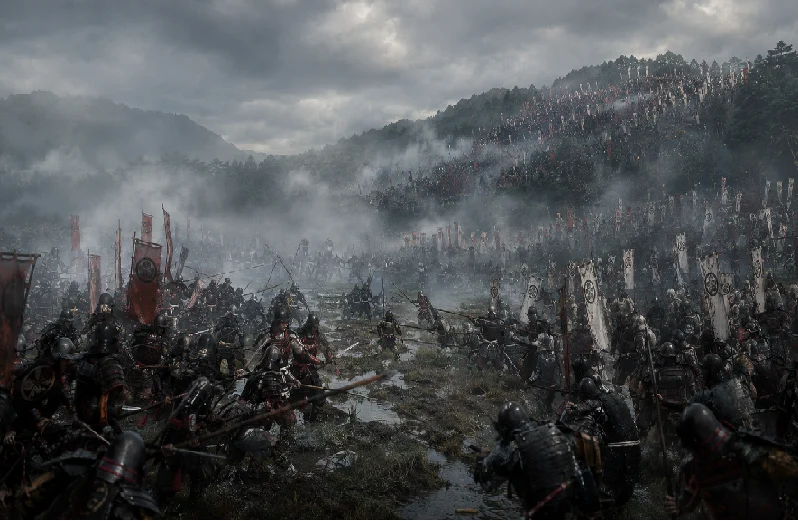
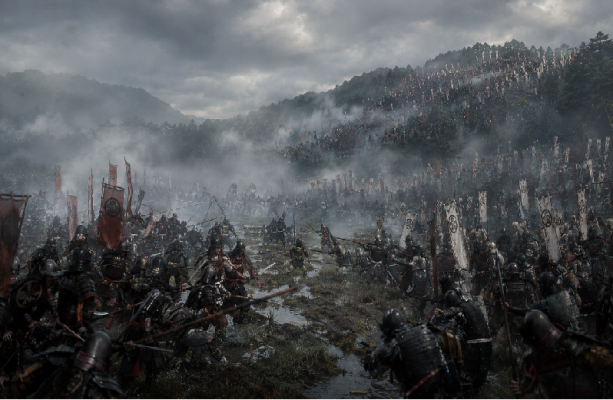
At dawn on October 21, 1600, a freezing mist blanketed the narrow mountain valley of Sekigahara in Mino Province. Over 160,000 armored combatants stood motionless in the sodden rice paddies, separated by a few hundred paces while unable to see the enemy battle lines before them. That tense morning silence marked the opening stage of the Battle of Sekigahara.
By mid-afternoon, more than thirty thousand warriors lay dead or dying in the mud, the Toyotomi hegemony was broken, and Japan’s political trajectory was sealed for two and a half centuries. The Battle of Sekigahara was far more than an athletic collision of iron and steel. It was an operational masterclass in psychological manipulation, broken oaths, and high-stakes treachery.
The Strategic Chessboard: Regency Crisis and Factional Drift
The crisis that led directly to the Battle of Sekigahara was triggered by the death of the supreme unifier, Toyotomi Hideyoshi, in the autumn of 1598. Hideyoshi left behind a five-year-old heir, Toyotomi Hideyori, protected by an unwieldy five-member Council of Elders (Tairō) and an administrative board of five commissioners (Bugyō).
The regency government fractured almost immediately into two opposing coalitions:
-
The Eastern Army (Tokugawa Coalition): Centered on Tokugawa Ieyasu, the wealthy lord of the Kantō plain, commanding absolute operational authority over approximately 75,000 veteran troops.
-
The Western Army (Toyotomi Loyalists): Directed by the civilian bureaucrat Ishida Mitsunari, with Mōri Terumoto installed as titular commander, fielding between 80,000 and 85,000 men.
Mitsunari leveraged ancestral loyalties to the Toyotomi clan to build an expansive western confederation. He mobilized formidable regional daimyos, including Ukita Hideie of Bizen, the fierce Shimazu clan of Satsuma, and the sprawling forces of the Mōri house.
Ieyasu capitalized on deep personal resentments festering among frontline samurai. Many commanders who fought in Hideyoshi’s grueling Korean campaigns despised Mitsunari for submitting critical performance appraisals to the central court. Ieyasu weaponized these grievances, transforming the conflict into a crusade against administrative tyranny.
By the autumn of 1600, regional castle garrisons had fallen along the Nakasendō and Tōkaidō highways. Both hosts converged on the crossroads of Mino Province, making the Battle of Sekigahara the inevitable climax of late-Sengoku power politics.
Logistical Realities and Feudal Military Organization
Operating armies of this magnitude across central Honshu pushed seventeenth-century logistics to its breaking point. Late-autumn downpours turned the unpaved highways into deep troughs of black clay, delaying supply packhorses and baggage caissons.
Soldiers marched on emergency subsistence rations:
-
Hoshi-ii: Steamed and dehydrated unpolished rice, carried in linen shoulder bags, reconstituted with cold spring water on the march.
-
Miso Paste and Salted Plums: Pressed balls of salted soybean paste (miso-dama) and dried pickled plums (umeboshi) to prevent dehydration and electrolyte collapse.
-
Fodder Constraints: Warhorses consumed up to twenty pounds of dried grass and grain daily, forcing cavalry units to strip local farming hamlets bare within hours.
The infantry relied on standard mass-produced combat gear:
-
Okegawa-dō: Riveted and hinged iron plate cuirasses designed to deflect musket balls and blunt trauma from pikes.
-
Nagae-yari: Five-to-six-meter ash-shafted infantry pikes tipped with triangular steel points, deployed in synchronized pushing walls (yari-awase).
-
Tanegashima Matchlocks: Smoothbore muzzleloaders firing lead balls weighing fifteen to thirty grams, capable of punching through breastplates at fifty paces.
To protect burning match cords from torrential rain, matchlock gunners carried their fuses coiled inside bamboo tubes and shielded their locks beneath oiled paper flaps.
Strategic preparations [Internal Link: Sengoku Jidai Strategic Evolution] dictated rapid night marches, forcing both armies to deploy on the wet fields of Sekigahara without sleep or cooked meals.
The Landscape of Mino: The Natural Kill Zone
The geography of the Sekigahara basin heavily favored the Western coalition when deployments finalized before dawn. The valley formed a narrow triangular bottleneck through which the Nakasendō highway ran toward Kyoto.
Mitsunari arranged his contingents in an interlocking semi-circle along the surrounding heights:
-
Mount Sasao (Northern Anchor): Mitsunari deployed his main battle division behind two tiers of wooden palisades and anti-cavalry ditches, commanding direct sightlines over the valley floor.
-
Mount Matsuo (Southern Flank): The nineteen-year-old Kobayakawa Hideaki occupied this dominant mountain plateau with 15,000 fresh, well-drilled warriors, looking directly down onto the flank of the valley.
-
Mount Nangū (Eastern Rear): The massive Mōri host, led by Mōri Hidemoto and Kikkawa Hiroie, held positions behind the Eastern Army’s marching line.
On paper, Mitsunari had designed a classic envelopment trap. The Eastern Army would be pinned in front by Mitsunari and Ukita, struck on the left flank from Mount Matsuo, and crushed from the rear by Mount Nangū.
Yet this elegant tactical design suffered from a fatal political cancer. Several western commanders had spent the preceding weeks exchanging secret letters with Ieyasu, pledging inaction or outright treason when the trap closed.
08:00 AM: The Clash in the Clearing Mist
Around eight o’clock in the morning, the heavy morning fog suddenly lifted under gusting autumn winds. The opening moments of the Battle of Sekigahara began without formal commands from the supreme commanders.
Eager to deny his rivals the honor of striking first, Fukushima Masanori led his six thousand Eastern infantrymen across the muddy paddies, crashing directly into the fortified center held by Ukita Hideie. Simultaneously, Ii Naomasa’s elite vanguard—the famous “Red Devils,” wearing crimson-lacquered armor—bypassed designated attack lanes to strike Ukita’s flank.
The valley erupted into concussive violence. Rolling volleys from batteries of tanegashima tore through advancing ranks, dropping front-line spearmen into the waterlogged dirt.
Pike companies collided in the mud with the sound of splintering ash wood:
-
Front ranks locked shields and breastplates together in dense kinetic scrums.
-
Rear ranks used their long pikes to beat downward onto the iron helmets (kabuto) of the opposing file.
-
Mud dragged down wounded men, causing dozens to drown under the weight of their own armor and trampling boots.
Ieyasu moved his personal command post forward along the central road to stabilize the frontline. His forward presence steadied Eastern morale as waves of Western infantry surged forward from behind their palisades.
By mid-morning, the Eastern Army was bleeding heavily across every sector. The Battle of Sekigahara hung in dynamic balance, with neither side able to achieve an operational breakthrough on the valley floor.
Flank Paralysis: The Unanswered Signal Fires
Recognizing that the Eastern vanguard was exhausted and overextended, Mitsunari prepared to spring his trap. He ordered signal rockets ignited at his command post on Mount Sasao, sending dense plumes of black smoke rising into the sky.
The rockets signaled Mount Nangū and Mount Matsuo to sweep down the mountain slopes and crush the Eastern Army. Nothing moved.
At Mount Nangū, Kikkawa Hiroie, who had concluded a secret non-aggression pact with Ieyasu, parked his troops across the narrow descent path. When Mōri Hidemoto demanded to know why the vanguard remained stationary, Hiroie sent back his famous dismissal: his men were “simply eating lunch.” The entire rear division was immobilized without a shot fired.
Meanwhile, on Mount Matsuo, Kobayakawa Hideaki stared down at the slaughter, ignoring frantic messengers dispatched by Mitsunari. Hideaki had accepted bribes and territory pledges from both coalitions, leaving him paralyzed by indecision.
The structural flaw of the Western Army at the Battle of Sekigahara was exposed. Mitsunari was a brilliant administrator, but an arrogant diplomat whom many military veterans openly distrusted. In contrast, Ieyasu’s seasoned battlefield pedigree commanded immediate, unquestioned obedience.
Tactical communication systems [Internal Link: Historical Battlefield Command Logistics] failed completely when commanders lacked political trust in the issuing authority.
The Ballistic Ultimatum at the Battle of Sekigahara
By noon, Ieyasu recognized that Kobayakawa’s refusal to commit was jeopardizing his entire operational plan. If the 15,000 fresh troops on Mount Matsuo descended on the Eastern flank, the battle was lost.
Ieyasu made one of the most audacious tactical decisions in Japanese military history. He ordered his frontline gunners to turn their matchlocks away from the enemy in front of them, aim up the slopes of Mount Matsuo directly into Kobayakawa’s camp, and open fire.
The volleys of lead balls rattling off the trees and banners of Kobayakawa’s camp were not meant to inflict heavy casualties. They were a ballistic ultimatum: declare your loyalty immediately, or face destruction as an enemy.
The psychological gamble shattered the young daimyo’s nerve. Panicked by the realization that neutrality was impossible, Kobayakawa ordered his banners forward.
At twelve-thirty in the afternoon, fifteen thousand fresh troops descended the slopes of Mount Matsuo. They did not attack the Eastern Army. They plunged straight into the exposed right flank of their western ally, Ōtani Yoshitsugu.
+---------------------------------------------------------------------------------+
|                       CASCADE COLLAPSE AT SEKIGAHARA                            |
|                                                                                 |
|  [Ieyasu's Arquebusiers Fire into Mount Matsuo]                                 |
|                         |                                                       |
|                         v                                                       |
|  [Kobayakawa Breaks: 15,000 Troops Charge DOWN into Western Flank]              |
|                         |                                                       |
|                         v                                                       |
|  [Ōtani Yoshitsugu Line Crushed by Betrayal]                                   |
|                         |                                                       |
|                         v                                                       |
|  [Wakizaka, Ogawa, Kuchiki Defect] ──> [Ukita & Mitsunari Center Dissolves]     |
|                         |                                                       |
|                         v                                                       |
|  [Shimazu Sacrificial Forward Breakout] ──> [Total Route & Tokugawa Hegemony]   |
+---------------------------------------------------------------------------------+
The Collapse of the Western Center
Ōtani Yoshitsugu had anticipated potential betrayal from the young lord on the mountain. Despite suffering from advanced leprosy that left him blind and unable to walk, Yoshitsugu directed his men from an open palanquin, having constructed palisades facing Mount Matsuo.
When Kobayakawa’s divisions struck, Yoshitsugu’s veteran samurai held firm:
-
The Ōtani contingent counterattacked with leveled pikes, pushing the defectors back up the terraced slopes.
-
For thirty minutes, Yoshitsugu’s men repelled forces outnumbering them four to one.
-
The balance broke when four neighboring Western commanders—Wakizaka Yasuharu, Ogawa Suketada, Akaza Naoyasu, and Kuchiki Mototsuna—witnessed the defection and turned their weapons against Yoshitsugu.
Assaulted simultaneously from three directions by former allies, the Ōtani division disintegrated. Yoshitsugu ordered his loyal retainer to decapitate him and bury his head in the marsh, preventing the enemy from taking it as a trophy.
The destruction of the southern flank unhinged the entire Western line at the Battle of Sekigahara. Eastern regiments swarmed into the breach, rolling up the exposed flank of Ukita Hideie’s division.
Within an hour, the disciplined tactical contest degenerated into a brutal pursuit. Seeing the lines fold, foot soldiers cast aside heavy pikes and armor, fleeing toward the mountain passes of Mount Ibuki.
The Shimazu Forward Breakout: The Sutegamari Tactic
Amid the chaos of the rout, one Western division mounted a desperate, legendary counter-movement: the 1,500 warriors of the Shimazu clan from Satsuma. Cut off from all escape routes and surrounded on three sides, Shimazu Yoshihiro refused to surrender or flee into the brush.
Yoshihiro ordered his remaining men to execute the ultimate martial maneuver: charge forward, directly through the center of the advancing Eastern Army.
The Satsuma warriors advanced in an aggressive wedge, employing the suicidal rearguard tactic known as sutegamari:
-
Small squads of four to six arquebusiers dropped to one knee directly in the path of pursuing cavalry.
-
The squad fired at point-blank range into the horses, dying in place with short swords to delay pursuit while the main body advanced.
-
As pursuers cut down one detachment, another squad took up positions fifty yards further down the road.
The charge broke clean through the teeth of the Eastern ranks, mortally wounding Eastern commander Ii Naomasa during the pursuit.
Although Yoshihiro escaped back to Kagoshima with barely eighty surviving warriors, their ferocious breakout prevented the annihilation of their clan. By two o’clock in the afternoon, organized firing ceased across the valley. The Battle of Sekigahara was over.
Archaeological Evidence and the Head-Inspection Ritual
Modern excavations across the Sekigahara basin provide concrete material evidence that confirms the brutality recorded in contemporary military war chronicles (gunki-monogatari).
Archaeological surveys have recovered thousands of diagnostic military artifacts:
-
Hundreds of flattened, deformed lead musket balls exhibiting mushrooming patterns consistent with high-velocity impacts against iron plates.
-
Skeletons recovered from the Higashi Kubizuka (Eastern Head Mound) displaying clean horizontal cervical cuts made by razor-sharp short swords (tantō).
-
Deep skull fractures inflicted by the blunt shafts of heavy nagae-yari, proving that clubbing was just as common as thrusting in close-quarter melees.
Following the rout, Ieyasu conducted the formal head-inspection ceremony (kubi-jikken). Staff officers washed, combed, and mounted the severed heads of high-ranking enemy samurai on wooden tags bearing their names.
Historical estimates indicate that between eight and twelve thousand warriors perished during the six hours of combat. The vast majority of these casualties occurred during the final ninety minutes, when the collapse of the Western flank left fleeing infantry exposed to mounted pursuit.
Geopolitical Aftermath: The Pax Tokugawa
The strategic results of the Battle of Sekigahara permanently extinguished the Sengoku Jidai, ushering in the early modern era of Japanese history. Within days, Tokugawa cavalry captured the fleeing leadership of the Western coalition.
Ishida Mitsunari was captured hiding in the hills of Mount Ibuki, transported to Kyoto, and publicly beheaded on the dry bed of the Kamo River alongside Ankokuji Ekei and Konishi Yukinaga.
Ieyasu executed a massive reallocation of feudal domains across Japan:
-
Confiscation of Wealth: Ninety-one western daimyo houses were stripped of their lands, transferring over five million koku of annual rice yield to the Tokugawa family.
-
The Fudai Placement: Trusted ancestral vassals (fudai daimyo) were granted strategic castles along vital highways, mountain passes, and coastal choke points.
-
The Tozama Exile: Untrustworthy outer lords (tozama daimyo), such as the Mōri and the Shimazu, were banished to impoverished territories on the outer fringes of the archipelago.
In 1603, Emperor Go-Yōzei formally bestowed upon Ieyasu the title of Sei-i Taishōgun. Ieyasu established his military government (bakufu) far from the imperial court of Kyoto, in the fishing village of Edo (modern Tokyo).
The Battle of Sekigahara established the political foundation for the Pax Tokugawa—two hundred and fifty years of internal peace, rigid social stratification, and national isolation (sakoku) that lasted until the Meiji Restoration in 1868.
Frequently Asked Questions
Why did Kobayakawa Hideaki defect at the Battle of Sekigahara?
Kobayakawa defected because Tokugawa Ieyasu used direct military intimidation to force his decision. After hours of hesitation on Mount Matsuo, Ieyasu ordered his matchlock gunners to fire directly into Kobayakawa’s camp. Realizing that neutrality was impossible and fearing immediate destruction by the Eastern Army, Kobayakawa honored his secret pre-battle pact with Ieyasu and charged into the Western flank.
How long did the Battle of Sekigahara last?
The Battle of Sekigahara lasted approximately six hours on the morning and afternoon of October 21, 1600. The engagement opened around eight o’clock in the morning when the mist burned off and ended by two o’clock in the afternoon following the collapse and rout of the Western Army’s center.
What happened to the Toyotomi clan after the Battle of Sekigahara?
The Toyotomi clan survived the battle, but their power was drastically reduced. Hideyoshi’s young heir, Toyotomi Hideyori, remained inside Osaka Castle, his ancestral lands reduced from a national hegemony to a regional holding of 650,000 koku. The clan was permanently extinguished fifteen years later during the Siege of Osaka in 1614 and 1615.