
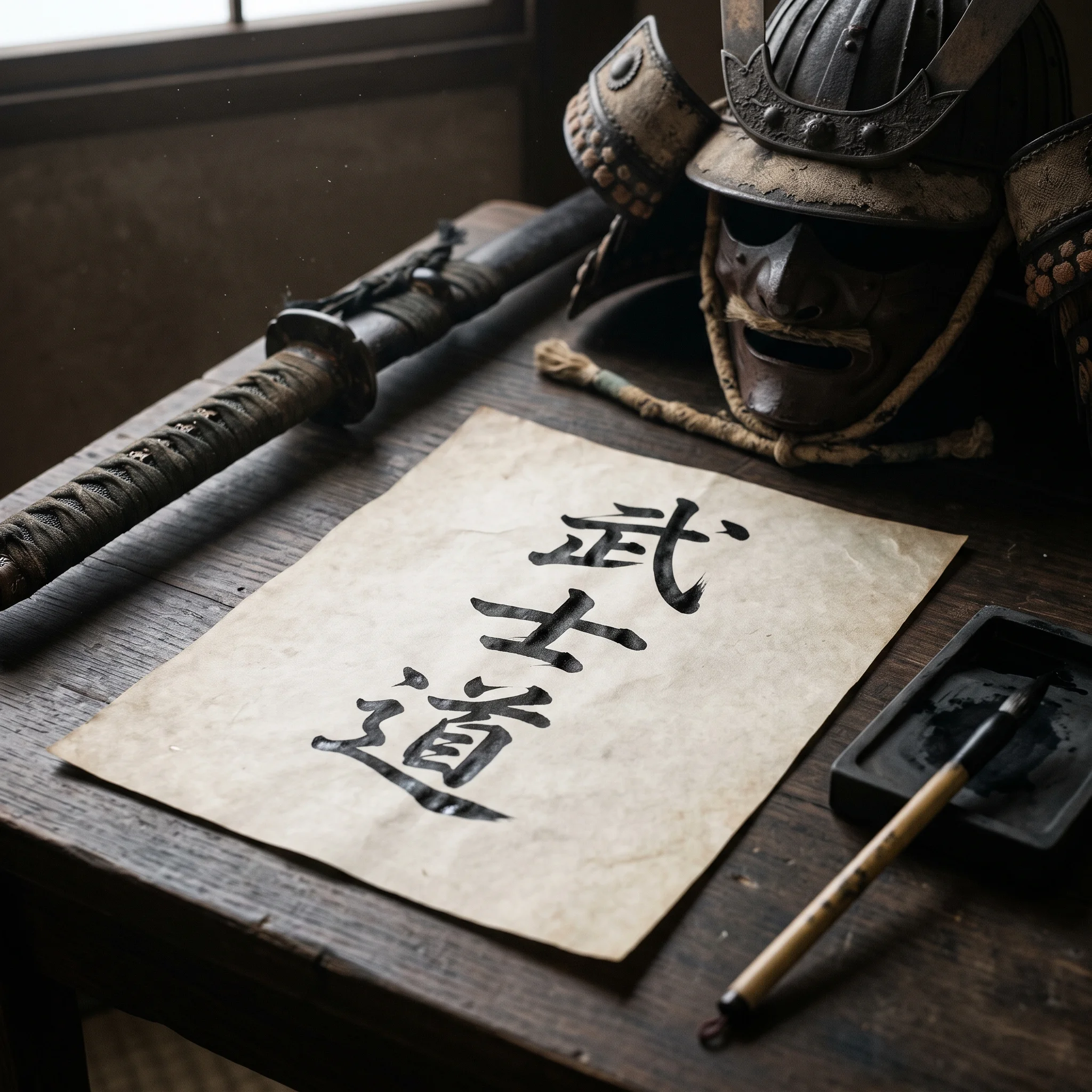
Bushido Code: The 8 Virtues That Defined Feudal Japan
The Bushido code served as the moral, legal, and operational framework of the Japanese warrior elite for centuries. Translating literally as “The Way of the Warrior,” this unyielding standard dictated how retainers dressed, governed provinces, fought in brutal field engagements, and faced ritual execution. Far from an abstract theory of chivalric etiquette, the tradition developed directly out of long civil conflicts, balancing battlefield pragmatism with spiritual discipline.
Provincial military clans relied on this doctrine to forge raw levies into cohesive, deadly shock troops. Over successive eras of clan rivalry, the principles of the Bushido code absorbed esoteric Buddhist metaphysics, indigenous ancestor worship, and classical continental ethics. While modern cinema frequently paints these warriors in romanticized strokes, genuine primary records reveal a hardened survival philosophy shaped by ruthless civil wars and iron administrative control.
The Origins and Historical Evolution of the Bushido Code
The formal codification of the Bushido code did not occur in a sudden legislative decree. Its earliest roots date to the late Heian and early Kamakura period (1185–1333), when Minamoto no Yoritomo established the first military government in Kamakura. This historic shift severed imperial courtiers in Kyoto from real political muscle, concentrating total territorial authority in the hands of hereditary martial houses.
Early medieval military chronicles did not employ the term Bushido. Retainers instead pledged their lives to Kyūba no Michi, the “Way of the Bow and Horse.” During this frontier period, martial prowess focused primarily on mounted archery, equestrian skill, and personal combat challenges between mounted commanders.
[1185–1333: Kamakura Bakufu]  ──► Kyūba no Michi (Way of the Bow & Horse)
              │
              ▼
[1467–1603: Sengoku Jidai]    ──► Pragmatic Realism & Gunpowder Integration
              │
              ▼
[1603–1867: Tokugawa Peace]   ──► Neo-Confucian Bureaucracy & Ethical Canon
              │
              ▼
[1868–1912: Meiji Transition] ──► Nitobe Inazō's Global Systemization
The catastrophic warfare of the Sengoku period (1467–1603) radically transformed these primitive cavalry traditions. Following the collapse of Ashikaga central authority in the Onin War, field armies swelled to tens of thousands of infantrymen organized into dense pike lines and disciplined matchlock units. As detailed in the operational breakdown of [Internal Link: Battle of Sekigahara Tactics], battlefield pragmatism, strategic deception, and coordinated mass volleys rapidly overshadowed individual displays of chivalric combat.
Survival on Sengoku battlefields demanded harsh tactical realism rather than sentimental moralizing. Warlords rewarded absolute obedience, logistical efficiency, and unit discipline above ancestral pedigree. The Bushido code during this period prioritized unshakeable collective loyalty to the clan above abstract notions of personal fair play.
The transition toward a universal moral canon occurred during the prolonged peace of the Edo period (1603–1867) under the Tokugawa shogunate. With internal frontiers closed and major uprisings extinguished, the samurai class transitioned from frontline assault troops into salaried urban administrators, tax collectors, and judicial clerks. Scholars such as Yamaga Sokō and Daidoji Yūzan synthesized warrior ethos with Neo-Confucian governance principles to prevent moral rot within an idle garrison class.
Centuries later, educator Nitobe Inazō published Bushido: The Soul of Japan in 1899 to interpret these ideals for Western readers. Nitobe formally isolated eight core ethical virtues, creating the systematic moral paradigm recognized internationally today.
The 8 Core Virtues of the Feudal Samurai
The historical Bushido code rests on eight fundamental pillars designed to regulate public governance, personal honor, and tactical discipline.
| Virtue | Japanese Kanji | Tactical and Civic Application |
| 1. Rectitude | 義 (Gi) | Uncompromising justice, moral decision-making, and duty without hesitation |
| 2. Courage | 勇 (Yū) | Calculated valor in the line of duty; complete rejection of rash dog-deaths |
| 3. Benevolence | 仁 (Jin) | Measured clemency, peasant protection, and restrained martial force |
| 4. Politeness | 礼 (Rei) | Strict adherence to court etiquette, tea ceremony discipline, and social order |
| 5. Sincerity | 誠 (Makoto) | Inviolable personal word; absolute truthfulness in administrative oaths |
| 6. Honor | 名誉 (Meiyo) | Defense of ancestral name; dread of public disgrace and moral corruption |
| 7. Loyalty | 忠義 (Chūgi) | Subordination of individual and family survival to the territorial lord |
| 8. Self-Control | 自制 (Jisei) | Total suppression of pain, terror, grief, and disruptive personal desire |
1. Gi: Rectitude and Moral Justice
Rectitude formed the unyielding skeletal core of the Bushido code. It demanded an absolute capacity to determine an ethical path through reason without vacillation or self-interest.
Nitobe compared rectitude to the bones of a human body, noting that without skeletal structure, intellect and physical prowess produce only an unprincipled monster. In administrative decisions, a magistrate exercising Gi passed judgments devoid of bribery or nepotism. On campaign, it meant executing lawful orders immediately, recognizing that dying when it is right to die represents the highest fulfillment of martial office.
2. Yu: Heroic Courage Under Fire
Within the Bushido code, physical bravery was praised only when deployed in the strict service of righteousness. Reckless battlefield aggression devoid of tactical merit received open condemnation from veteran field commanders.
Throwing away one’s life in an uncoordinated, hopeless cavalry charge was dismissed as inujini, a useless “dog’s death.” True martial courage, or Yū, required cold mental serenity in the face of imminent destruction. A warrior advanced against barricaded matchlocks or defended a rear guard with total clarity, fully accepting mortal risk to secure a strategic objective.
3. Jin: Benevolence and Controlled Clemency
Because the warrior class wielded unchecked legal authority to execute commoners for insolence, the virtue of benevolence was vital to prevent administrative tyranny. Jin commanded provincial governors and clan elders to balance martial rigor with measured compassion.
This pillar demanded mercy toward peasant farmers who supplied the provincial tax base in unpolished rice. On campaign, commanders were expected to offer clean terms of surrender to defeated garrisons when resistance ceased. Classical authorities held that unrestrained cruelty was the mark of a base brigand, whereas true masters preserved life whenever territorial stability allowed.
4. Rei: Politeness and Ritual Protocol
Politeness in feudal Japan went far beyond superficial charm or polite speech. Within the framework of the Bushido code, ceremonial courtesy was an external manifestation of deep internal discipline and social awareness.
[Ritual Politeness (Rei)]
       │
       ├─► Chanoyu (Tea Ceremony) ──► Cultivates Serenity & Crisis Composure
       ├─► Precise Ojisigi (Bows)  ──► Acknowledges Structural Hierarchy
       └─► Controlled Vocabulary  ──► Prevents Fatal Intra-Clan Duels
Warriors spent decades mastering the strict physical forms of the tea ceremony (chanoyu), architectural entry protocols, and layered social etiquette. These exact movements trained retainers to maintain physical grace and mental composure during volatile territorial negotiations. A calculated insult or a failure to execute a proper bow constituted an intolerable breach of etiquette that routinely triggered deadly duels.
5. Makoto: Honesty and Absolute Sincerity
The spoken word of an elite retainer was considered legally binding and spiritually absolute. The traditional maxim Bushi no ichi-gon (“the single word of a warrior”) represented an ironclad guarantee that required no notarized documentation or commercial collateral.
Lying, financial duplicity, or treacherous broken oaths were branded as deep cowardice. The Bushido code held that a warrior who broke his stated pledge brought permanent dishonor to his entire clan. In feudal diplomacy, warlords often staked provinces and family hostages upon a single verbal agreement, confident that a breach of faith invited absolute social death.
6. Meiyo: Honor, Reputation, and Family Lineage
Personal honor represented the primary social currency of the samurai elite. A retainer’s reputation was cultivated from early childhood through demanding family expectations and strict clan reviews.
Any accusation of cowardice, treason, or moral degeneracy inflicted grave damage on an individual’s standing and dishonored generations of ancestors. The terror of public shame (haji) operated as an effective deterrent against cowardice and corruption. When reputation was compromised, only dramatic restitution could restore balance to the lineage.
                      [ Public Breach of Honor ]
                                  │
                                  ▼
                         [ Collective Shame ]
                 (Stains Ancestors and Clan Heirs)
                                  │
               ┌──────────────────┴──────────────────┐
               ▼                                     ▼
      [ Social Ostracism ]                   [ Ritual Seppuku ]
   (Stripped of Rank/Rōnin)               (Full Clan Redemption)
7. Chūgi: Duty and Uncompromising Loyalty
Unconditional fidelity to one’s territorial lord (daimyō) formed the foundational bedrock of Japanese feudalism. Retainers were expected to subordinate personal safety, familial affection, and private property to the survival of the ruling house.
Yet authentic warrior discipline never endorsed mindless obedience to tyrannical madness. If a lord pursued a reckless path that threatened the clan’s destruction, a loyal retainer was duty-bound to offer direct remonstrance (kangen). When diplomatic remonstrance failed, retainers frequently committed suicide alongside their written protests to prove their objections were motivated by pure duty rather than insubordination.
8. Jisei: Self-Control and Emotional Restraint
The final virtue demanded absolute psychological control over physical pain, fear, grief, and vanity. Retainers were trained from early childhood never to display destabilizing emotions in public spaces.
Weeping over personal bereavement or wincing under the knife of a surgeon was seen as a failure of inner resolve. This rigorous emotional control allowed commanders to process horrific casualties during combat without losing operational focus. By mastering internal passions, the practitioner maintained complete situational awareness under conditions of mortal terror.
Ritual Suicide: The Mechanics of Seppuku
No institution within the Bushido code illustrates the terrifying gravity of samurai honor like seppuku. Known colloquially in the West as hara-kiri, this formal cut was not an act of chaotic desperation, but a legal execution and spiritual redemption ritual.
+-------------------------------------------------------------+
|             THE FORMAL SEPPUKU CEREMONIAL RITE              |
+-------------------------------------------------------------+
| 1. PURIFICATION: Ritual bath; dressing in white shiromuku   |
| 2. JISEI: Inscribing the farewell death poem in classical verse|
| 3. EMBOWELMENT: Incision across the abdomen using a tantō   |
| 4. KAISHAKU: Swift, precision decapitation by a kaishakunin |
+-------------------------------------------------------------+
The ceremony followed an exact sequence designed to preserve personal dignity:
-
The condemned samurai bathed thoroughly and put on unlined white hemp robes (shiromuku), the traditional garment of purification and physical death.
-
Kneeling in the formal seiza posture on clean tatami mats, he was served a final modest meal accompanied by two measured cups of sake.
-
He composed a farewell death poem (jisei) reflecting on nature, impermanence, and the transition of the human spirit.
-
Grasping a short blade (tantō) wrapped in clean mulberry paper to ensure a firm grip, he plunged the point into the left side of his lower abdomen.
-
He drew the steel horizontally to the right before turning the blade upward to sever vital organs.
Because deep abdominal trauma causes prolonged agony rather than rapid unconsciousness, an execution assistant (kaishakunin) stood close behind with an unsheathed katana. As the condemned warrior made his cut, the assistant brought his blade down across the exposed neck. A master swordsman aimed to sever the spine while leaving a thin throat flap intact (dakikubi), preventing the head from rolling across the floor.
Through this terrible ordeal, the warrior demonstrated that his allegiance to the Bushido code was more powerful than the biological instinct for survival. Seppuku expunged judicial guilt, restored the family’s honor, and protected ancestral lands from state confiscation.
Philosophical Foundations: Zen, Shinto, and Neo-Confucianism
The intellectual architecture of the Bushido code represents a functional fusion of three philosophical systems. Each tradition supplied distinct psychological and moral tools to reinforce the warrior mind.
               ┌──────────────────────────────────────┐
               │         THE BUSHIDO CODE             │
               └──────────────────┬───────────────────┘
         ┌────────────────────────┼────────────────────────┐
         ▼                        ▼                        ▼
  [ ZEN BUDDHISM ]       [ INDIGENOUS SHINTO ]     [ NEO-CONFUCIANISM ]
  - Emptiness (Mu)       - Ancestral Veneration    - Five Relationships
  - Reflexive Action     - Kami & Sacred Land      - Social Hierarchy
  - Death Transcended    - Purity Over Pollution   - Civic Administration
Zen Buddhism and Combat Psychology
Zen Buddhism offered the elite warrior practical tools to master psychological fear in lethal situations. Zen taught that all physical forms are fleeting illusions and that the separate human ego is a mental barrier to enlightenment.
Through sitting meditation (zazen), a retainer stripped away conscious analytical calculation. This mental discipline allowed a swordsman to enter the state of mushin, or “no-mind.” In this state, defensive blocks and lethal counter-cuts occurred instantly through muscle memory without the delay of conscious thought. As outlined in the philosophical analysis of Encyclopaedia Britannica’s analysis of Bushido history, Zen transformed martial training from mechanical drill into spiritual realization.
Shinto and Ancestral Loyalty
Shinto, Japan’s indigenous spiritual tradition, rooted retainers in their physical land, ancestral lineages, and community shrines. Shinto mythology described the Japanese archipelago as a sacred creation of the gods (kami), governed by an unbroken imperial line descended from the sun goddess Amaterasu.
This cosmology infused feudal service with deep patriotic urgency. Defending a territorial castle or clan estate was understood as maintaining spiritual purity against chaotic corruption. Retainers fought with the conviction that their deeds were observed directly by watchful ancestral spirits.
Neo-Confucianism and Public Administration
While Zen tempered combat psychology and Shinto reinforced lineage pride, Neo-Confucianism provided the legal and civic framework for peace. During the Edo period, the state endorsed the school of Zhu Xi as official political doctrine.
Neo-Confucianism emphasized the “Five Cardinal Relationships,” defining strict mutual duties between ruler and subject, father and son, husband and wife, elder brother and younger brother, and friend and friend. This framework transformed the Bushido code from a rough military code into an ethical philosophy of civil administration. By prioritizing civic order and public duty, it taught a heavily armed military class to serve as stable governors and fair judges.
Historical Reality vs. Modern Romantic Myth
Modern popular culture frequently portrays feudal retainers as chivalric heroes who never lied, never broke a treaty, and engaged only in fair personal duels. Authentic military history presents a much more complicated picture of political survival.
During the Sengoku period, warlords routinely forged letters, broke blood oaths, poisoned rivals, and carried out devastating night ambushes. Master tacticians like [Internal Link: Miyamoto Musashi] openly favored deception, late arrivals, and environmental advantages to defeat their opponents in mortal combat. Renowned generals such as Oda Nobunaga and Toyotomi Hideyoshi relied on massed gunpowder firepower and starvation sieges rather than theatrical single duels.
HISTORICAL SENGOKU MILITARY PRACTICE
├── Reliance on massed ashigaru pike formations
├── Volley-fire tactics using imported matchlocks
├── Night ambushes, sabotage, and economic blockades
└── Shifting alliances based on immediate clan survival

PEACETIME EDO SYSTEMIZATION (THE WRITTEN CODE)
├── Idealized emphasis on personal single combat
├── Condemnation of deceit and political pragmatism
├── Elevation of unyielding loyalty over survival
└── Moral justification for hereditary administrative rule
The idealized, spotless warrior was largely constructed during the long peace of the seventeenth and eighteenth centuries. Unemployed retainers and urban scholars romanticized an unyielding code to explain why an armed aristocracy was necessary in an era without wars. The historical Bushido code was a flexible, evolving balance between bloody military survival and high moral philosophy.
Frequently Asked Questions
What does the term Bushido literally mean?
The term Bushido combines three Japanese characters: Bu (martial or military), Shi (gentleman or warrior), and Do (the path or way). Translated directly, it means “The Way of the Warrior.” The phrase describes the complete ethical, physical, and philosophical system that guided the Japanese samurai class from medieval military rule through the close of the feudal era in 1868.
When was the Bushido code officially written down?
The Bushido code was never compiled into a single binding legal constitution during the height of medieval civil warfare. Foundational warrior values were passed down through clan house rules (kaho) and military instructional manuals. Written systematic analyses emerged during the peaceful Edo period with works like Yamaga Sokō’s Bukyo Shogaku and Yamamoto Tsunetomo’s Hagakure. The modern eight-virtue model was popularized worldwide in 1899 by educator Nitobe Inazō in his famous volume, Bushido: The Soul of Japan.
What happened if a samurai broke the Bushido code?
A warrior who committed a severe breach of the Bushido code suffered swift disciplinary, social, and legal consequences. Minor infractions resulted in demotion, formal censure, or reduction of hereditary land stipends. Grave transgressions—such as cowardice during operations, graft, theft, or insubordination—compelled the warrior to perform ritual seppuku to restore his clan’s honor. If cast out without permission to take his own life, the retainer became a masterless wanderer (rōnin), losing his social status and livelihoods.